National High Speed Rail Corporation Ltd. (NHSRCL) has invited tender for Final Alignment design including Aerial LiDAR survey and other related works for Chennai-Mysuru High Speed Rail Corridor (about 435 kms. long). Earlier NHSRCL has invited tenders for the first dedicated preparatory survey work to develop the Detailed Project Report (DPR) for the upcoming 450 km Chennai–Mysuru High Speed Rail Corridor.
The project is to be completed in 150 days from the date of award of work. Estimated department cost is 10.20 crores.
Tentative Route | Chennai Bengaluru Mysuru High Speed Rail
Scope
Contractor shall refine the already developed preliminary route based on detailed engineering grade survey using Aerial LiDAR & Imagery, stability considerations, geological consideration, construction consideration, accessibility, safety maintainability, environmental considerations, etc, fixing of permanent control points using GPS survey, levelling survey from Survey of India GTS benchmarks, geo-referencing of revenue maps. Aerial LiDAR Survey shall be complemented by Aerial Imagery in a corridor width of 300 m (150 m on either side) around the proposed alignment.
LiDAR Technology
Lidar is a method which deploys laser light to measure distances and develop 3D projection of the target. The sensor picks up the reflection from the target and the differences in laser return times and wavelengths can then be used to make digital 3-D representations of the target.
In our previous article we had talked about how using the locally available resources one can build a MODERN ECONOMIC CORRIDOR in the region that stretches from Chamarajanagar to Bidar, all along the Kalyana Patha expressway (E-way).
This article talks about the development of the towns and cities along the E-way. We start with Chamarajanagar and its nearby towns.
Recently a part of Kalyana Patha NH150A between Byrapura and Challakere section developed by Dilip Buildcon
“Harness the strengths of each town and build on it”, should be the mantra of development in the region. While investing on the industrial front, care should be taken to use as much locally available resources as possible OR those sourced from within the region OR sourced from places which have good connectivity to the region. This cuts the unnecessary logistics costs, and the resources can be men and raw-materials.
Each of the towns should be screened for its strengths, and the objective of the development should only be to BOOST THE LOCAL ECONOMY of the town. Enhanced economy creates more JOBs, with JOBS comes PROSPERITY knocking at the door.
Chamarajanagar
BioEnergy
The Chamarajanagar is the southernmost tip of Kalyana Patha E-way. The district’s strength lies in agriculture. However, the district suffers from scanty rainfall and frequent droughts, and because of this water is a SCARCE RESOURCE there. So, keeping that in mind, the government should encourage farmers to explore cultivating biofuel bearing crops in large swathes of dry OR semi dry lands in the district.
The biofuel bearing crops require very minimum water and can grow in even dry weather. By growing this crop the farmers can increase their income.
The government should invite private companies with incentives to set up small biofuel refineries at strategic places in the district. The refineries are used to distill biodiesel from the crops grown by the farmers. The biodiesel so produced should match the standards set by the Indian petroleum ministry.
Biofuel Crop Growers Association (BCGA)
The state government should facilitate the formation of BCGA under whose jurisdiction the growers from all towns/ cities of the region all along the Kalyana Patha, should come. BCGA can help growers collectively bargain with the government and the private parties.
The private entities of the region who have invested money on establishing refineries also need to come together to form an association for collectively bargaining with Biodiesel buying companies and the government.
The refiners should be allowed to export their produce if there is a need. The government should support it. The association can do COLLECTIVE MARKETING of Biodiesel.
Bio-waste Processing Unit
Bio-waste from agriculture harvest, vegetable markets, animal slaughterhouses and wasted food from wedding choultries, restaurants and houses, can be processed to produce Biogas which can be used as fuel to cook food. The Central government has already come up with biogas policy to support this. Even the biogas can be obtained from TREATING the SEWAGE from the cities & towns.
The Karnataka government should now come out with policies supporting the establishment of bio-waste processing units to produce biogas from waste. These units can come up at strategic places throughout the Kalyana Patha region.
Imported Liquified petroleum gas (LPG) being used for cooking purposes is draining out India’s forex, which is creating a big problem. Instead of betting on imported gas for cooking, why not use domestically produced Biogas for that?
The biogas obtained from processing bio waste needs to be bottled, marketed, sold and distributed. The government should invite private companies with lots of incentives to set up biogas bottling plants at strategic locations in the villages and towns. Cost of biogas cylinders will be much less and affordable when compared to LPG gas cylinders.
Bioslurry as BioManure
The bioslurry from the biogas plants is very rich in micronutrients which can be used as bio fertilizer OR bio manure during the farming process. This product can be sold to farmers at a reasonable cost.
Plastic Garbage Recycling Units
Plastic has become a part of day-to-day life without which it is impossible to imagine life. But plastic is hazardous for the environment and is polluting our water bodies, air, agriculture crops, seas, oceans, etc.
However, if the plastic can be melted and mixed with bitumen and used in road laying, that road lasts quite long. This way we can solve the plastic problem once-and-for-all.
The advantages of using waste plastics for road construction are as follows
The process is easy and does not need any new machinery.
Usage of plastic in road laying results in reduced usage of bitumen, so cost saving.
Plastic increases the aggregate impact value and improves the quality of flexible pavements.
Wear and tear of the roads will decrease to a large extent.
This will reduce the wear & tear of vehicle tires, and increase the durability of shock absorbers and engine. In a way it enhances the life of vehicles.
The government should invite companies to set up plastic recycling units throughout the region and Kalyana Patha E-way should be laid using plastic mixed bitumen. Also, all new roads in the region should be laid using plastic mixed bitumen for better durability. By this all ragpickers will get busy earning decent money.
How to create the Biowaste Economy?
The government should create a Special Purpose Vehicle (SPV), a legal entity with the focused mandate to HOLISTICALLY PLAN and IMPLEMENT the biogas economy across the Kalyana Patha region.
SPV should have SUBJECT MATTER EXPERTS (SME), legal experts, law makers etc. on its roll. They will work towards creating an environment which facilitates the creation of a thriving bio waste/ biogas economy.
Food Park
Chamarajanagar grows a wide variety of agriculture products, fruits and vegetables which can be processed, packed, distributed and sold with the help of private companies. A food park with a minimum size of 500 acres can be envisaged to host food processing companies.
The government can offer incentives to attract investments.
Dairy Farming
World-over the popularity of A2 MILK OR the milk obtained from “DESI COW” is growing fast. Farmers can be encouraged to involve in A2 desi cow farming as one of the sources of income. The government can promote dairy farming aggressively.
Several large MNCs and medium sized DAIRY COMPANIES can be invited to set up shop in a 250 acres DAIRY PARK where they make value added products from the Authentic A2 milk sourced from the farmers. The products are as follows
A2 milk cheese
A2 milk butter
A2 milk ghee
A2 milk paneer
A2 milk ice cream
A2 milk curd
A2 milk whey protein powder
A2 milk based immunity boosting products
Care should be taken that the cattle depends on only ORGANIC FEED, so that the milk RETAINS all its inherent MICRONUTRIENTS.
Large dairy farmers can even establish their own biogas (GOBAR GAS) obtained from cow urine and cow dung for cooking purposes.
Textile Parks
Chamarajanagar farmers grow a lot of cotton and companies from TamilNadu, as it is close to the district, can be invited to set up cotton spinning and weaving units in the 1000 acres textile park.
Also, large organizations who are into making readymade garments, home furnishing spread across India can be invited with incentives to establish units there.
Silk Park
In Chamarajanagar MULBERRYFARMING and SILKWORMREARING existed as an industry for ages now. However, a lot needs to be done by the government to increase the production, and to boost the SILKECONOMY.
A 500 acres SILK REELING/ WEAVING and FABRIC MAKING park needs to be established with private participation. Another silk park of 500 acres needs to be set up to make SILK GARMENT/ DRESS MATERIAL and HOME FURNISHING for export as well as domestic consumption. Large and medium sized MNCs from India and abroad should be invited to establish units in the silk park with lots of incentives.
The government’s single minded focus should be to CREATE JOBS and BOOST INCOME of the people involved in the industry.
Technical textiles market is expected to grow from USD 177 billion in 2018 to reach USD 220 billion by 2022. The share of Indian contribution to the world technical textiles market is about just 4-5%.
The technical textile industry market size in India for the year 2017-18 is approximately USD 15 billion in size. However, the demand for technical textiles is growing fast and is expected to cross USD 25 billion by the year by 2022. So, technical textiles is a SUNRISEINDUSTRY for India in the 2020s decade, which needs to be diligently tapped and this has to happen with renewed focus.
The government can invite technical textile MNCs from across the globe to base their units in the region.
Following table talks about various technical textile varieties neatly categorized for an easy understanding.
Various Technical Textile Varieties – Kalyana Patha
Furniture Park
The government should create a furniture park on a 500 acre plot and invite MNCs, with lots of incentives, to establish units for making furniture for the Indian and foreign markets. Even the SMEs can be invited for setting up units in the park.
For the goods produced in the district, the government should invite professional logistics companies with PAN INDIA operations to build and operate sophisticated warehouses equipped with the STATE-OF-THE-ART equipment and cold storages to store perishable food items.
These warehouses should be located at strategic locations throughout the Kalyan Patha region.
Agroforestry
Sandalwood Cultivation
Sandalwood plantation has taken to fancy in Karnataka, as it is the most economically rewarding crop in the world. It is turning out to be a long term investment bet for the cultivators.
However, the majority of the farming community is not aware of that. Since 2001 even the government is supporting the sandalwood cultivation by changing few archaic regressive laws. As per the changed law, sandalwood can now be grown on private land. After trees mature, they need only be sold to the government owned Karnataka Soaps and Detergents limited (KSDL).
The government provides saplings and offers training on the cultivation, harvest and safeguarding of trees so that farmers benefit the most. One kilo of matured sandalwood costs around Rs. 15,000 currently. As demand grows the rate also soars high.
A four acres of land having 2500 sandalwood trees can fetch more than Rs. 15 Crores in a span of 10 years. Money invested to take care of the trees could approximately be Rs. 10 lakhs in that period, depending on the land and topography.
For more details on sandalwood cultivation please visit following sites
Mahogany tree, known for its unique texture and hardness, is cultivation friendly and can fetch very good returns on the money invested for the farmer, in the medium and long term basis. It can be cultivated as an intercrop with coconut, mango, guava, jackfruit or any other kinds of fruit bearing trees.
Mahogany wood is used for making fashionable, durable furniture and cabinets (residential and commercial). The wood also can be used in making boats, ships, musical instruments like Piano, violin, guitar etc.
It is also used to make house doors, and also in the architectural millwork. There is a huge export market for finest mahogany wood, exporting which can fetch millions of USD for the farmers.
Rosewood OR Sheesham tree is one of the most sought after woods known for its unique texture and hardness. The furniture(residential and commercial), doors, music instruments and many other products made from Rosewood look quite premium and classic and last for generations despite needing very little maintenance.
Since there is a HUGE GAP in the supply and demand, the cost of Rosewood is always high. The cultivation is bereft of any complications with little requirement of water and care. The Rosewood can be a long term bet for earning good returns.
The government should create a STATUTORY BODY with the single minded focus to boost farm income by aggressively promoting HIGH-VALUE, HIGH-REVENUE generating crops across the region along the Kalyana Patha E-way. The body should contain agri-specialists, agri-industrialists, law-makers and others with proven track record.
Care should be taken to promote ECOLOGICALLY SUSTAINABLE farming practices and use of DRIP IRRIGATION everywhere to make sure agri produce retains all the MICRO NUTRIENTS and the cultivable land retains moisture.
Tourism
Chamarajanagar is blessed with virgin waterfalls, rivers, ancient temples, forests, hills and many more. The government can promote tourism bigtime by engaging expert marketing agencies with past experience.
View from Bandipur’s highest point on the Himavad Gopalaswamy Betta | Pic Credits- Yathin S Krishnappa
Hotels
The Chamarajanagar lacks in quality hotels for the businessmen and tourists to come and stay. The government should invite hospitality tycoons to establish 3*, 4* and 5* hotels in the Chamarajanagar city. They can be showered with lots of incentives to set up hotels there.
What’s in store for the government?
This is the question that runs in the minds of many ministers. However Kalyana Patha project, if implemented in totality like what has been discussed above, can transform the region for the better like never before, thus earning the goodwill and loyalty of the people.
The government can reap windfall in the elections, which enables being in power for a foreseeable future. Also, the government can collect a lot of money as the GST contribution from the local economy.
Conclusion
From time immemorial man’s inherent nature has always been to aspire for economic success and well being, and it is his right to do so. All his efforts and hard work in life goes towards achieving that. In fact the governments, at least in democracies, can support him by providing him opportunities to excel in life.
Chamarajanagar Bidar Economic Corridor – Kalyana Patha is one such project which has the power to TURN man’s DREAMS into REALITY.
Karnataka Industrial Area Development Board (KIADB) has called a tender for the development of Kochanahalli Industrial area which lies adjacent to the existing Kadakola industrial layout at cost of 32.7 crores. It is expected to come upon approximately 200 acres of land.
Background
The proposal to expand Kochanahalli, Kalahalli, Adakanahalli and Thanyda industrial areas were mooted by the then Industries Minister Shri RV Deshpande. Out of which Adakanhalli, Kalahalli and Thandya have undergone expansion and are in various phases of development.
Kochanahalli industrial area is located next to the upcoming Inland container depot by Container Corporation of India (CONCOR) at Kadakola which makes it a very attractive investment destination. All of the above mentioned industrial layouts put together to form a big industrial cluster having varied industrial portfolios. The layouts are proposed to be or are interconnected with 4/6 lane roads.
Scope
The total cost of the project is 32.7 crore and the civil works are expected to be completed in 11 months from the date of award of the tender.
The scope of work includes-
Formation of 24M & 18M Wide Cement Concrete Roads
Construction of RCC Side Drains & Culverts
Providing & Laying of HDPE Water supply
Adakanhalli industrial area will also be undertaking the above-mentioned works in its undeveloped areas at an estimated cost of 5.4 crores.
A magnificent millenia old temple very close to Mysuru city
Keshava Temple Somanathapura is the millenia old marvel, which most of the tourists visiting Mysuru miss going there despite being near to the city. The KeshavaTemple, also referred to as Chennakeshava Temple.
The breath-taking exquisite architecture and the grandeur the millenia old temples like Somanathapura Keshava temple offers certainly deserves a visit by the tourists. Each of these temples is so spell-bound that they (tourists) may get fully absorbed for hours and may get lost in the beauty of the intricate art. That’s the kind of magic-spell they unleash on the visitors. Let’s see in brief what’s in these temples which turned them into what they are.
Keshava Temple Somanathapura, Mysuru
Brief about Keshava Temple Somanathapura
Somanathapura the place, which was earlier under the rule of Cholas, was conquered by Hoysala Vishnuvardhana in A.D. 1117. Later it was ruled by the Vijayanagara Kings and Wodeyars of Mysore. It became one of the foremost agrahara townships during the rule of Narasimha III. An inscription dated A.D. 1268 records that Somanatha Dandanayaka, an illustrious general of the Hoysala King Narasimha III, established an agrahara in Somanathapura and named it as “Vidyanidhi Somanathapura” and consecrated the temple of Keshava.
The temple is the most ornate and perfect model of the Hoysala style of architecture. The temple facing east has three garbhagrihas on the west, north and south, all connected to a common pillared hall through a separate sukanasi. The western sanctum houses the image of Vishnu as Keshva. The southren has the image of Venugopala and the northren has image of Janardana. The temple stands on a high stellate platform, and it enclosed in a spacious courtyard surrounded by pillared corridors with sub-shrines.
The temple is known for elaborately carved doorways, and beautifully executed ceilings of the navaranga mandapa. The friezes of the basement, beautiful images of deities adoring the exterior wall surfaces with names of the sculptors who carved them like Mallitamma, the highly decorated and beautifully proportioned superstructure resting on the three sanctums, known for their poise and elegance render the Keshava temple a perfect model of the trikutachala order.
Visitor shall be required to show photo identity proof in original at the entry to the monument.
Edibles are not allowed inside the monument.
Inflammable/dangerous/explosive articles are not allowed.
The entry to the monument will close thirty minutes prior to sunset.
Ticket is valid only for 3 hours from the time of entry
(Please note: only e-tickets are available and no offline tickets available as on 31.12.2020).
Eateries around temple
There are NO decent eateries in the vicinity of the temple, so tourists are advised either to head back to Mysuru for food OR carry food along, and eat it in a safe place. Never litter the temple surroundings and always throw the trash in the dust bins.
Things to carry
(a) Identity card, (b) Camera, (c) Sunglass, (d) Sun cap (e) Water bottle (f) Medicine (g) Sun cream (h) Power bank.
How to get there?
Public transportation service is not good to rely on though cut service KSRTC and Private buses are available between Mysuru and Somanathapur via Bannur. The best way is to avail the paid cab services at the hotel where the tourists are lodged.
Further information on the Somanathapura temple can be got from wikipedia
STPI Mysuru was setup by the then NDA Government headed by PM Atal Bihari Vajpayee in 1998. Mysuru was the first non capital city to have this prized IT facility. Many home grown IT companies got associated with STPI with time and flourished big.
However, the dream to make IT the next big sector in Mysuru did not get through due to the negligence of subsequent State Governments in supporting home grown IT ventures. The reason being the lack of dedicated incubation space and necessary IT infrastructure. Hence, many Mysuru startups migrated to Bengaluru and flourished there. Mysuru’s subpar ecosystem for tech startups is attributed largely to the constrained space and infra at SJCE – STEP campus, Manasagangotri.
Union Government in 2015 came up with the mission of having state of the art STPI centres across the nation to bring in technology revolution across niche areas.
This Union government mission came as a breather to Mysuru and many other Tier 2 cities . In 2016 the State Government made available the land owned by KEONICS for a dedicated STPI centre which was to become the new address of STPI. The land is located in Hootagalli Industrial area next to Infosys.
This centre was to be built with Central and State Government funding. Cost of the project was estimated to be 30 crore with 23 crore coming from Central Government. Though the construction started in 2017, the centre is still not fully operationalised and the Government is incurring heavy losses by keeping it vacant and idle.
Introduction to STPI
Software Technology Parks of India (STPI) is an autonomous society under the Ministry of Electronics and Information Technology. Contribution of STPI to India’s Telecom and IT revolution is unmatched since its inception in 1990.
In fact, Bengaluru became what it is today because of the timely establishment of STPI park in 1991 by the then Narasimha Rao’s Government. STPI then boasted the latest infrastructure of the time that was on par with what developed countries had in that era.
The government through STPI stood solidly behind the rise of Bengaluru from a laid back city and pensioner’s paradise to the most-happening silicon valley of India and one of the top 10 startup capitals of the world. So far, this has been the fastest evolution of any city from nothing to everything within the span of 2 decades flat.
Upcoming STPI Mysuru Campus
Need to Fast track the STPI Centre
Inspite of being the first non capital to host an STPI in the country, Mysuru failed to capitalise on the IT boom. We have wasted 2 decades of opportunities. Had STPI Mysuru been equipped with a large facility and all necessary infrastructure with government’s backing, like Bengaluru, Mysuru too would have had a massive local IT industry by now, exporting software in billions of USD, and EMPLOYING YOUTH IN LAKHS. The irony is, even after 20 years of wait, the job still remains UNFINISHED and STPI center is UNUSED, thus exposing the government’s APATHY towards the development of TIER 2 cities.
New dedicated Centre – the beginning
Work on the ground began in 2017 and by 2018 it picked up the speed. In fact, in 2018 and in 2019 Shri Pratap Simha, MP Mysuru-Kodagu even visited the site to see the progress of the project and gather information first hand about its completion.
According to STPI officials then, the project was set to be ready in all aspects by late 2018.
The new center of STPI is supposed to have a building with two structures one with a built-up area of 40,000 sqft to accommodate around 200 workstations equipped with an incubation center, 24×7 high-speed Internet, redundant UPS power, telecom and other modern amenities. The center would charge Rs. 4000 per month per workstation that would immensely help individuals who have startup dreams.
The other structure with an open space of 6,000 sq ft could be used by companies interested in taking up the entire space by investing on their own tailor made infrastructure.
Thanx to our beloved PM @narendramodi ji, STPI-Software Technology Park of India with 200 seats Incubation Centre envisaged by Late PM Atalji in 1998, will be completed by coming September. Small step towards creating an IT hub in Mysuru. pic.twitter.com/PPzx0UJfkc
Alas, despite all the tall promises made by STPI authorities, the work on the ground is not fully finished yet even in 2020. Now they can easily put the blame on Coronavirus and wash their hands-off. That’s not an excuse for INCOMPETENCY of the authorities.
The question to ask is, why was the entire 2019 wasted?. How long should one wait? – quarter century?
The way forward
As the adage goes “Proof of the pudding is in eating” the proof of the success of STPI campus is when it is fully occupied and the facility is used 100%. The STPI authorities have to work towards that.
Following steps need to be taken immediately
At the earliest, complete the work 100% – even 95% is NOT ACCEPTABLE
Aggressively get into promotional activities to bring in customers.
Use social media for marketing.
Approach some STPI Bangaluru companies to use the facility at Mysuru.
Make sure the facility is used up 100% at the shortest possible time.
STPI can support centre of excellence (CoE)
Following CoE needs to be established in Mysuru under the guidance of Ministry of Electronics IT (MeITy) through STPI
Need for Mysuru International Exhibition and Convention Centre: There is a land parcel of 100 acre in the jurisdiction of Karnataka Industrial development board (KIADB) reserved for Film city project (FCP) at Immavu industrial estate near Nanjangud. However, with the FCP moving to Bangaluru, this land is LYING VACANT over the last 3 years now. The idle land brings NO REVENUES to the government, and is a total loss. MIEC can come up on this land and the government can earn quick returns.
Background Information
In 2018, the then Siddaramaiah government had got KIADB acquire 100 acres of land at Immavu industrial estate near Nanjangud for the establishment of FCP. Despite whos-who of film fraternity recommending current government dispensation to base the FCP near Mysuru, the project moved to Bengaluru due to some (un)avoidable circumstances, and the present B S Yeddiyurappa government allotted Rs. 500 Crores for the same in the 2020 state budget. So, the 100 acres of acquired land for the FCP at Immavu remains vacant, thus bringing colossal loss to the government.
Make the land earn some serious money
Instead of losing money by keeping the land idle, it should be put to business use urgently and earn some serious money. That means, with the help of private companies, a state-of-the-art International Exhibition and Convention (IEC) center can be quickly established there. This center should be on the lines of Bangalore International Exhibition and convention center (BIEC).
The management of the center should be outsourced to a reputed organisation to operate it profitably. This way the government along with the private operator can earn significant revenues.
Representative Pic | Source-BIEC
International Exhibition and Convention (IEC) Centre in a Nutshell
The Mysuru International Exhibition and Convention Centre should have the following
Air conditioned halls: Two massive air conditioned halls which can accommodate more than 5000 people each. These halls can be used as exhibition centers for exhibiting products and services of international repute.
Auditoriums: These halls have attached auditoriums with state-of-the-art audio/ video equipment to host international seminars and symposiums. Rock concerts, gigs by reputed artists can also be hosted there. Indian traditional programs by famous artists too can be conducted there.
Warehouse: The exhibitors need a warehouse to bring their products and assemble to be displayed at exhibition halls.
Loading & Unloading Hub: The exhibitors should be able unload and load their products through a well equipped hub with mechanised cranes, forklifts and other required equipment.
3*/ 4* Hotels: Invite any private hotel operator to build 3 star OR 4 star hotels to accommodate guests.
A Public Food Court: The large number of attendees of the exhibition and other programs have to eat during the event. In order to do that, a large food court with a modern kitchen equipped to dish out Indian (South & North India), Chinese and Continental food, is to be housed.
The land required for establishing the IEC is approximately 25 acres, which has already been acquired, and is readily available with KIADB.
Representative Pic | Source-BIEC
Location
The land for the IEC is located at KIADB Immavu industrial area (IIA) adjacent to Adakanahalli KIADB industrial layout near Nanjangud. The IIA is one of the well developed industrial estates in the state.
The infrastructure at IIA is top class and it includes the following
It has 4 LANE roads,
Industrial grade power infrastructure,
Fiber optic cable laid already for high-speed broadband,
Copious water from the nearby Varuna canal for drinking
Solar powered street lights,
Cell towers for better mobile communication,
Effluent treatment plant for treating industrial waste water.
No wonder the estate houses some of the top-notch MNCs who are happily operating from the past few years now.
IEC Operator
The modern exhibition and convention centers are very complex to operate profitably. Only those who are in that business for ages can do that job well. The government should invite any internationally reputed company to build and operate the IEC to the international standards.
Only the one that has experience in running a chain of IEC centers globally, should be given the job of operating the IEC center, Mysuru.
Connectivity to IEC
The road that leads to the IIA is well connected to the Mysuru ~ Nanjangud ~ Chamarajanagar National Highway 766. Mysuru city is 20 kms away from the site and has many star hotels to accommodate the guests and dignitaries. Also Mysuru Airport is very near to the site around 6 kms away. So traveling to and from the airport to the site hardly takes any time.
Why IEC near Mysuru makes sense?
The location of IEC near Mysuru makes sense because there are many internationally reputed tourist attractions within 50 kms radius from Mysuru. There are a lot of attractions which the delegates can choose after exhibition hours. The tourist attraction is divided in circuits and they are as follows
Heritage Circuit – Visit to many heritage sites.
Temple Circuit – Visit to many old temples which were built by the past kings
Traditional Cultural Circuit – Visit to many places which showcases local culture and tradition
Traditional Food Circuit – Visit to food joints which dish out traditional local food.
Yoga Circuit – Visit to many internationally reputed yoga schools.
Well developed tourism is the Mysuru’s forte and she never disappoints anyone. The location of IEC is such that the visitors who come to attend any event won’t be bored at all, and may come back with their families to experience the joy again. So, MIEC can do miracles to the local economy.
Representative Pic | Source-BIEC
Conclusion
The Mysuru International Exhibition and Convention Centre (MIEC) will boost the local tourism economy by adding jobs to the job pool. The government will earn revenues through taxes and through increased GST. The money earned by the people will be spent on various things, which will add to the GST kitty and boost the state as well as Indian economy.
A large nation like India with a roaring economy makes it attractive for the investors to pump in their hard-earned money into Indian economy, which itself will pump-prime the economy further in a vicious circle.
National High-Speed Rail Corporation Limited (NHSRCL) has invited tender for the first dedicated preparatory survey work to prepare the Detailed Project Report (DPR) for the upcoming 450 km (Approximate Tentative Route Length) Chennai Bengaluru Mysuru High Speed Rail project. This HSR is expected to cut down the travel time between Chennai and Mysuru to less than 2hrs 30minutes.
Introduction
The National High-Speed Rail Corporation Limited (NHSRCL) (the “Employer”) was incorporated on 12th February 2016 under the Companies Act, 2013 with an object to finance, construct, maintain and manage the High Speed Rail Corridor in India. The Company has been modelled as ‘Special Purpose Vehicle’ in the joint sector with equity participation by Central Government through Ministry of Railways and two State Governments viz. Government of Gujarat and Government of Maharashtra.
The Company would be ushering India into the category of few countries of the world (about 15) using High Speed Railway System. The High-Speed Rail (HSR) project apart from being a technological marvel, would afford many quantifiable benefits like saving in travel time, vehicle operation cost, reduction in pollution, job creation, reduction in accidents/ enhanced safety, imported fuel substitution, and reduction in pollutants.
The project would also boost the infrastructure and add to the growth of economy. HSR would be an integrated system having overall optimization of various components, viz. Hardware, Software, Human-ware, and their interface, etc.
Scope of Work
Survey, Identification of Overhead, Over Ground, Underground Utilities and Identification of Power Sourcing Options for substations Along the Proposed CHENNAI–BENGALURU–MYSURU (CBM) High Speed Rail Corridor
Brief
The proposed Chennai–Bengaluru–Mysuru(CBM) High Speed Rail Corridor is planned along major expressways/ national highways, greenfield areas and may be passing through arterial roads of the intermediate city road network for High Speed Rail connectivity between different cities along the corridor.
Route
Tentative Route details as per the tender document
Tentative Route | Chennai Bengaluru Mysuru High Speed Rail
Stations
The tentative location of stations on the proposed Chennai–Bengaluru–Mysuru(CBM) High Speed Rail are Chennai, Poonamallee, Arakkonam, Chittor, Bangarapet, Bengaluru, Chennapatna, Mandya and Mysuru.
Maintenance depot proposed at chainage 25.700 (Near Poonamalle, Tamilnadu)
Tentative Station | Chennai Bengaluru Mysuru High Speed Rail
The state government in its 2015-16 general budget tabled a proposal to replace conventional street lights consisting of non LED lamps with LED lamps to realise energy savings across all city corporations of the state.
In 2018 the government issued an order (UDD 550 PRJ 2017) to implement the project on PPP (Public private partnership) mode. The project aims to provide sustainable and energy efficient smart lighting in all city corporations.
Mysuru City Corporation is all set to implement the scheme with a centralised control and monitoring system. MCC has invited bids for the work. Time of completion would be 8 months from the date of award of work. The estimated budget is in excess of 100 crore.
Centralised Control and Monitoring System (CCMS)
The objective of deploying CCMS is to operate, control, monitor and rectify the integrated LEDs remotely via wireless communication. This would mean all the vital technical parameters/data of the LEDs can be accessed in one control room through software’s dashboard.
CCMS works on the node and hub model. A node here comprises LED luminaries connected to a controller and metering unit (CMU), a smart meter, which transmits all the collected data to the hub. Many such nodes representing various regions of the city communicate with the hub through cellular or RF networks.
The Hub houses a data centre with a control room which uses software to decode the data received from CMUs to interface with the operator.
Benefits of CCMS in street lighting context
Real –time monitoring
Geotagging of all luminaries
Valuable Data collection
Swift discovery of technical faults and rectification
Scope for Automation
Achieve higher Energy efficiency
Data is Gold!
Data collected can be analysed and effectively put to use to further achieve energy efficiency. The operator can remotely analyse faults, automate certain functions, check daily power consumption, raise notifications for errors, synchronise LEDs brightness with traffic patterns among other functionalities.
All luminaries however far they may be can be controlled from just a click away through the software dashboard by the operator. With data analysis more energy saving interventions can be proposed.
Mysuru city Corporation Savings Plan: Statistics
MCC is set to implement the scheme in all 65 wards of the city. Based on the category of roads, Indian standard for lighting of public thoroughfares has suggested the average LUX (luminance at road surface).
MCC has categorised the roads into A1, A2, B1 and B2 as per the IS 1944- 1970 code. The private operator can choose the relevant LED wattage to conform to the lighting standards.
As per MCC’s latest survey, there are 50639 conventional street lights, 9539 LED streetlights and 2752 energy meters.
MCC’s energy saving benchmark
Parameter
Value
Present Energy consumption (kWh.)
3,79,29,370
Post LED implementation Energy Consumption (kWh.)
1,56,36,643
Energy Savings (kWh.)
2,22,92,727
Energy Savings (%.)
58.77%
MCC is aiming to achieve a guaranteed 58.77 % energy savings, hence, the operator has to achieve the guaranteed savings, failing which he shall be liable for penalty.
Food Craft Institute Mysuru: is the culmination of the joint efforts by the government of India and the government of Karnataka for training and grooming the youth in the hospitality industry, so that they deliver top-notch services at the reputed hotels and restaurants around the world. For years, the institute has been functioning out of make-shift premises in Mysuru, and is now planning to build and move to their own campus for which they have called for tender.
This article is to briefly introduce Food Craft Institute Mysuru (FCIM) to the readers and their campus plans.
Food Craft Institute Mysuru I Source: FCIM FB
Introduction
Of late, the world is seeing a seismic shift in the eating habits, as people are increasingly dining-out at restaurants. In the developed world, eating out has become a common trend among family and friend circles. On an average they dine atleast 2 to 3 days a week outside, such is the trend. So, eating out is a multi billion dollar industry world-wide.
What has contributed to this?
The people often eat food outside because they want varieties. In fact, the world is becoming increasingly liberal towards the choice of food, and the consequence is, people want to call shots on what to eat, when and where. Various mobile Apps have aggressively contributed to this.
Managing Restaurants is becoming increasingly complex
Because more people eat outside, more restaurants have mushroomed across cities which has resulted in more competition in attracting customers. Since the customers have a wide choice, their expectations have sky-rocketed.
This is keeping the restaurants on toes to keep check on the expenses and at the same time meet the customers’ expectations.
Hotels & Airlines are even more complex to manage
Thanks to low-cost airlines and internet based reservations, booking hotel rooms and air tickets has become child’s play. When booked in advance, customers get steep discounts too. This triggered people to take flights to make low-cost air travels and check in at hotels of all categories across cities. That means, people are travelling a lot within India and outside on business and pleasure trips with families.
More people are travelling and checking in at hotels means more business, which brought intense competition in the airlines and hospitality industry. To attract customers, they (hotels and airlines) started giving deep discounts, which bled them financially and the industry learnt their lessons quickly.
The hospitality industry captains realized that only by providing better customer experience they could make customers happy. Happy customers means repeat business and this way they could stay in the business for long. Thus started the induction of professionals into the business. But why so?
Only Professionals can manage business well
Gone are the days when any hardworking person could manage business, but nowadays it needs professional touch. That means, to manage businesses to the satisfaction of customers, who have spoilt for choices, skilled professionals are necessary.
The Food Craft Institute Mysuru is one of such institutes that has been in the business of training and grooming youth to deliver professional services in the hospitality sector.
Food Craft Institute Mysuru I Source: FCIM FB
Food Craft Institute Mysuru in brief
The Food Craft Institute Mysuru (FCIM) has been set up by the Karnataka government in partnership with the central government. It is managed by the Board of Governors. The Principal Secretary, Tourism Department Govt of Karnataka is the Chairman for the Board, and the institute was started mainly to train and provide jobs to the youth in the various sectors of the hospitality industry, and to develop entrepreneurs.
Hospitality industry has the potential of offering millions of direct and indirect job opportunities to the trained manpower.
FCIM is affiliated to The National Council for Hotel management and catering technology (NCHMCT), Noida. The course material designed by NCHMCT lays emphasis on producing “highly skilled” operational and managerial staff for the hospitality industry. The FCIM brand image is so powerful that it is attracting hoteliers from all over India to its campus to hire graduates for their operations.
Food Craft Institute Mysuru plans to move to its new campus
FCIM has been operating for years now from Kannada Karanji Bhavana, Dasara Exhibition Grounds. With the stupendous popularity of the institute, a need is felt to move to its own campus that has state-of-the-art infrastructure to train and groom their students. The campus is set to come up in Hosahundi village, Mysuru.
This article explores some of the technical challenges in implementing runway underpass and the way forward with regard to Mysuru airport runway expansion.
Background
Mysuru airport at Mandakalli is all set for expansion and the euphoria around it is only increasing with every passing day. Mysuru is currently the only tier 2 city of the state devoid of a full-fledged airport. Expansion plans were mooted multiple times but all were kept in cold storage forcing Mysoreans to use Bengaluru airport for a faster connectivity to the outside world.
But now we are close to realising the dream of a full-fledged airport in our own backyard. As per Member of Parliament Shri. Pratap Simha, a portion of the total fund for Land acquisition(LA) will be made available by the state government soon, and the LA process shall commence early next year.
Air tarmac over a Highway
The peculiarity of Mysuru airport is that it is sandwiched between Mysuru-Chamrajanagar railway line and the Mysuru-Nanjangud NH 766. So, when viewed in plan, the centre line of runway is aligned perpendicular to both rail and highway. Diverting or realigning either of them proved to be cost prohibitive. Hence, expanding the airport in the current configuration was challenging and required a very unconventional solution.
The solution was to expand the runway across the National highway by grade separating them with the construction of an underpass along NH 766. Such concepts have been successfully adopted by various airports around the world from as early as the 1900s. But there are engineering challenges in implementing them. Varanasi and New Delhi are among other Indian cities which are exploring similar options for their runway expansion.
A Look at the various aircraft bridges around the world
Crash Impact and bomb proof underpass: Operating the runway over a live highway underpass is fraught with safety challenges. The design of such underpasses must account for extreme events like traffic crashes or a terror act involving explosives that are detrimental to its structural integrity. Such events impose large transient dynamic loads on the structural elements. Hence, it is necessary to provide adequate structural capacity to meet the loading demands. In simple words, the structure must dissipate the energy of ultimate imposed load without collapsing. And post event, the structure may be designed such that it is serviceable with repairs.
With regard to the extreme event of explosion, it is noteworthy to mention that the underpass in lieu of its confined configuration will cause reflection of blast waves within and further amplify the loads. So, Well-designed Structural joints, damping elements and optimum reinforcement ductile detailing will play a major role here.
To reduce the magnitude of this risk, certain interventions can be adopted as a first layer of defence-
Regulating Underpass traffic movement during an event of take-off or landing. Either through speed reduction or complete closure of traffic.
Continuous surveillance of the buffer zone along the underpass for detecting suspicious activities.
Installation of crash barriers around structural elements.
Robust design of Underpass roof slab and foundation: The roof of the underpass would serve as a foundation for the runway across the highway, so It is very essential to ensure that there is absolutely no differential settlement between the runway over underpass and the at grade runway pavement at any given time. In simple words, the underpass roof slab should maintain its level at all times without deforming. If a differential settlement were to occur it would then produce a big jerk to the aircraft in motion, not only proving dangerous to the aircraft frame but also rendering the runway non-functional.
Such settlements may happen due to long term effects like- ground settlement beneath the foundation and creep induced deformation of structural elements or due to seismic activity. (With sustained loading the roof slab may deform with time, a phenomenon called creep.)
Aircraft weight: In the design of runway underpass the major parameter that governs is the weight of the aircraft and the impact factor. The roof and lateral frame of the underpass are subjected to significant braking forces during an aircraft landing. Usually it is assumed to be 70% of the total weight of the aircraft.
For example, Boeing 747-8 Freighter has a maximum take-off weight (MTOW) of 447.7 tons and a maximum landing weight(MLW) of 346.091 tons. So Boeing 747-8 F generates 242 tons (70% of MLW) of braking load in lateral direction which the substructure of the aircraft bridge needs to resist safely.
So if Mysuru airport is aiming to go international it must have its airport underpass designed for the maximum weight of the aircraft (passenger/cargo/military) it envisages to cater for. Ideally the underpass must be designed to support heaviest plane like Airbus 380 and Antonov M225 (600,000 KG)
Speed and ease of construction: During the construction of the runway underpass highway traffic needs to be diverted or at times it may warrant closure of airport operations if safety is an issue. Traffic diversions increase commuters travel time and cost. Hence, the process of construction of the underpass needs to be expedited. This is where RCC precast, RCC-Steel composite and prestressing technology helps.
Precast construction involves casting of structural elements in a factory under controlled environment and then shipping them to the site for their installation and integration. This modular technology is century old and proven. Once the necessary land is cleared for underpass construction, various substructure and superstructure precast elements can be brought to the site and stitched in-situ in record time while still ensuring quality. This modular construction is very advantageous unlike the RCC in-situ staged construction which is time consuming and resource intensive.
The above points shed some light on the structural design engineering challenges such aircraft bridges bring on, which only calls for robust fool proof designs of underpass structural elements.
The Way Forward
Mysuru airport expansion project involves construction of a new passenger terminal, underpass, additional apron and taxiways. From here it is necessary to plan in such a way that the time taken to get the project completed is reduced. For which the owner AAI needs to be open minded to take up the works in phases as the entire land parcel might not be available in one go. So start the works wherever land parcels are available. This requires phased planning of construction activities.
To start with, the AAI can initiate construction of Underpass in Phase 1 and subsequently plan for other construction works as and when the land parcels are made available. Underpass construction would require minimum land requirements as it is along the National highway 766. All that is needed to be done is temporarily divert the NH traffic to nearby existing road networks. Once the underpass works are done, the road traffic can be reinstated back on the original NH 766 route.
As mentioned earlier the underpass needs to be designed to support operations of heavy duty cargo planes like Anotnov M225 (6,00,000 KG) and the width of the underpass be sufficiently wide enough to accommodate increase in highway traffic in lieu of future industrialisation.
The design and construction of runway underpass is critical and is fraught with challenges, hence, it is in the best interest of the project that phased construction be explored immediately with open mind.
Get started with the Mysuru Airport Runwayunderpass construction.
Bus service to Mysuru Airport: An airport is deemed to be a success only if it is well connected from various parts of the city. As soon as flight lands, there should be a connecting bus waiting for the passengers to be ferried to various locations of the city. Similarly, there should be bus services to the airport bringing air-passengers from various city suburbs before flights take off. This avoids people taking expensive private taxis to the airport, who (taxi operators) charge a “bomb” for the service rendered.
Taxing people heavily for commuting to and from the airport is in fact exploitation, which increases the overall cost of travel for the passengers. This may bring down people’s interest in taking flights to travel. The consequences of this are losses for the airport.
An airport is also a commercial entity like any other business whose motive is to operate profitably so that operational expenses can be taken care off with the money earned. So, the airport needs to make profits.
Volvo bus service to the Mysuru Airport
To make the airport easily accessible to the passengers from various Mysuru suburbs, KSRTC is starting “Volvo bus services”, which can make passengers reach the airport at highly affordable costs.
If the overall cost is reasonable, taking flights to various cities from Mysuru makes sense. This will attract more and more people to do air journeys and save a lot of time, thus making their travel convenient and pleasurable.
Following is the timetable of Volvo bus services from various locations and bus fares. This was released by KSRTC itself recently.
However, for the convenience of the passengers, KSRTC should list the timing on its website and the passengers should be able to book their tickets online.
City Bus Stand, Mofussil (Central) Bus Stand, J P Palace Hotel, Ginger Hotel, Radisson Blu Plaza Hotel, Sri Ganapathi Sachchidananda Ashrama, Mysuru Airport (Mandakali)
Mysuru and Kodagu MP Shri Pratap Simha along with other dignitaries from Railways and Container Corporation of India (CONCOR) have officially announced the commencement of the work pertaining to Inland Container Depot (ICD) and Multimodal Logistic Park (MMLP), at a private function held at a hotel in Mysuru. The function was well attended by businessmen who are into export business.
ರಾಜ್ಯದಲ್ಲೇ ಪ್ರಪ್ರಥಮವಾಗಿ ಮೈಸೂರಿನ ಕಡಕೋಳದಲ್ಲಿ ನಿರ್ಮಾಣವಾಗಲಿರುವ ICDಗೆ (ರೈಲ್ವೆ ಗೂಡ್ಸ್ ಟರ್ಮಿನಲ್) ಇಂದು ಚಾಲನೆ ನೀಡಿದೆ. ಇದು 102 ಕೋಟಿ ವೆಚ್ಚದಲ್ಲಿ 2023ರೊಳಗೆ ನಿರ್ಮಾಣವಾಗಲಿದೆ. Thank you @narendramodi ji @PiyushGoyal ji n #Concor CMD Kalyana Rama Sir. It vl be the first Multi Modal Log Park of Krn pic.twitter.com/XhM6vaHaUe
With the commencement of work, Mysuru region will see the infusion of fresh air into her saturated industrial environment. With no sea port/ airport nearby, exporting goods from the region has been very cumbersome, as the goods have to be transported by trucks on the congested roads. Because of this, it is becoming expensive to export from the region. This is one of the major stumbling blocks for new investments as of now.
With the realization of ICD/ MMLP at Kadakola, all hurdles for the exports will disappear. Since the complex will house a full-fledged customs office, getting customs clearances will be a breeze. The exporters now have to just seal their goods in the containers, obtain customs clearance, stick the “QR Code” to the container and send it directly to sea ports – Chennai OR Mangalore for exports. The MMLP operator can take the entire responsibility of packaging, storing and freight forwarding of the goods to the port. So, the entire task is outsourced to them.
This saves a whole lot of time and effort for the manufacturers, as they can concentrate on their core businesses instead of wasting time on works which won’t add any value to their businesses.
Mysuru: To ensure unhindered supply of water from the Krishna Raja Sagar Dam (KRS) even during summer, Karnataka Urban Water Supply and Drainage Board (KUWSDB) has initiated tender for the works pertaining to Hale Undavadi water lift project to supply Kaveri water to Mysuru city outskirts and adjoining villages. This project will augment the total drawing capacity from the dam.
Phase-1 is estimated to cost 210.5 crores. Piped Kaveri water has been a dream for the many layouts situated along ORR in Chamundeshwari Constituency. MLA Shri G T Devegowda and Member of Parliament Shri Pratap Simha have taken a keen interest in solving this long-pending issue, the dream is now all set to be realised.
MP Pratap Simha had initiated capacity augmentation of the Main balancing reservoir and central storage reservoir at Yadavagiri and Vijaynagar, respectively, under the Central Government sponsored AMRUT scheme which is now coming handy in the implementation of this project.
Project particulars
The works involve design, supply and commissioning of various hydraulic equipment along with electrical systems apart from the civil works like jack well, water treatment plant and other allied constructions.
Feeding KRS Command Area – Proposed Scheme
Phase 1
Raw water from KRS backwaters will be lifted through the Jack well cum pump house to be set up at Hale Undavadi.
The lifted raw water is pumped to the proposed 150 MLD Water treatment plant at Beechanakuppe, located 4KM to the south of the jack well.
Treated water from here will be transported to the MBR located at Vijayanagar 2nd stage and High-level reservoir at Yadavagiri for distribution to city areas.
Phase 2
In phase 2 the project aims to solve water problems of Koorgalli, Bogadi and Vijayanagar 4th stage in entirety. It is more ambitious in nature and scale.
A new Jack well will be built at Hale Undavadi.
The water treatment plant at Beechanakuppe will be expanded to handle 300 MLD of raw water.
New Main balancing reservoirs will be built at Koorgalli and Bogadi.
A New feed line to the existing Kuvempunagar and Vijayanagara 4th stage Water tanks are also proposed.
The Central Organisation for Railway Electrification (CORE) has invited bids for the Electrification of Mysuru Mangaluru Railway Line via Hassan including Arsikere line.
The tender work involves “Design, Supply, Erection, Testing and Commissioning of 25kV, 50 Hz, Single Phase, AC Electrification Works including OHE & TSS as Composite Electrical Work” in Mysuru(Excl)- Hassan(Incl)- Mangaluru(Excl)/ Arsikere(Excl) section Gr. 299 of Mysuru Division of South Western Railway.
The total estimated cost of Electrification of Mysuru Mangaluru Railway Lines is 110.50 crore with a completion period of 24 months from the date of award of work. Electrification is to be carried out for a total of 347 RKM /410 TKM. Ranking order for Bids is lowest to highest.
Tender Document Extract
Significance of Electrification
New Mangalore port trust (NMPT) is a major port on the western coast which is being developed under the Sagarmala project by the Union Government. And this is the only major sea-port of Karnataka.
The proposed electrification of Mysuru Mangaluru railway line assumes greater significance in the light of the ongoing Inland Container Depot works by CONCOR at Kadakola. Various industries in and around Mysuru region export their finished goods mostly via the Chennai port which is usually congested and takes time to process the inbound/outbound shipments.
However, in recent times the industries in and around Mysuru are exploring the option of shipping their goods via NMPT. Recently, JK tyres shipped out their cargo containers to Mexico via NMPT. Also, Hassan is fast emerging as an industrial centre with many renowned textile and pharma companies setting up their base in SEZs. Hence, the electrification of railway lines connecting Mangaluru, Arsikere, Hassan and Mysuru will go a long way in boosting the cargo potential handling of NMPT.
Total Electrification of railway lines from Mysuru
Railway mainline connecting Mysuru and Chennai via Bengaluru is already doubled and electrified. Also, the Mysuru – Chamarajanagar railway line via ICD Kadakola is being electrified with the tender process already initiated.
The electrification between Mysuru and Mangaluru/Arsikere via Hassan will lead to total electrification of railway lines from Mysuru. This would mean that the containers loaded from ICD Kadakola can easily be overhauled to NMPT by electric locomotives. It is noteworthy to mention that electric locomotives are more powerful and responsive than their diesel counterparts for heavy container movement.
City’s long-pending demand to have a dedicated flight to Mangaluru has become a reality. As per the current plan, Alliance Air, A wholly owned Subsidiary of Air India Limited is commencing direct Mysuru Mangaluru flight operations from December 11th 2020.
The existing mode of transport by road takes a whopping 6 hours and the transport by train takes even longer. Both the modes of transport wade through ghat sections making them unreliable during monsoons.
Connectivity means business
The new connectivity is expected to boost Industry and Tourism. We have seen that for a region to grow, connectivity matters a lot and that’s when people and money flow freely between the region, and what is good for people will eventually be good for the economy. Every region should be connected to every other region in the state and the commercial hubs of India for the overall development of the state.
Days of Operation
The Mysuru Mangaluru flight will operate four days a week: Wednesday, Friday, Saturday and Sunday. Based on the response it is expected to be made daily.
Schedule
The Flight AI 9532 will depart from Mysuru/MYQ at 11.20hrs and arrive in Mangaluru/IXE at 12.30hrs. In return, the flight AI 9533 will depart from Mangaluru/IXE at 12.55hrs and arrive in Mysuru/MAQ at 13.55hrs.
Greetings to all, now enjoy flying to Mangalore from @aaimysairport wef 11th December by @allianceair in addition to regular flights to existing destinations. We welcome you all to avail our services and hope to provide you a safe and memorable Travel experience. @AAI_Officialpic.twitter.com/O9TOMeyIy3
This article brings out the latest pictorial updates of 10 lane Mysuru Bengaluru Expressway (NH275) under construction between Mysuru outer ring road and Srirangapatna bypass near Naguvanahalli road. This stretch is approximately 6 KM in length.
Various civil works like construction of underpasses, culverts, curve straightening, leveling of land are being carried out.
Area under focus can be seen in the satellite imagery below
Satellite- Senitel 2 L2A
Location near Varuna Canal | NH 275
Location near Varuna Canal | NH 275
Bridge construction near Varuna Canel | NH 275
Underpass construction Kalasthavadi | NH 275
Near KR Mill | NH 275
Near KR Mill | NH 275
Near KR Mill | NH 275
2 lane Service road near KR Mill as seen towards Bengaluru | NH 275
Service road near Mahaver Temple towards Bengaluru | NH 275
Near Siddalingapura | NH 275
Underpass near Fish land | NH 275
Straightening of curve | NH 275
Service road as seen towards Mysuru | NH 275
Near Palahalli chord road | NH 275
Near Palahalli chord road | NH 275
Near Palahalli chord road | NH 275
Straightening of curve | NH 275
Near Srirangapatna bypass starting at Mysuru end | NH 275
Near Srirangapatna bypass starting at Mysuru end | NH 275
Side effects of Coronavirus: The global economy tanked due to several lockdowns, social distancing and closure of businesses. But one thing that has set the ball rolling is the unprecedented shift of focus from Metros to small towns.
That means cities like Mysuru, Tumakuru, Mandya, Davangere, Ballari, Mangaluru, Udupi, Hubballi-Dharwad, Belagavi, Kalaburagi, Vijayapura, Shivamogga, Karwar, Bagalkot, Raichuru, Bidar and other small cities/ towns in Karnataka are seeing increased job relocation. The truth is, these jobs belong to Metros and other big cities, but are being executed now from small towns and cities, which is boosting the local economy.
This article talks about the trends that are making it happen on the ground and how it will benefit the local economy.
Introduction
Since independence, the opportunities in India have always been in the Metros and other big cities. Be it higher education institutes, government offices and private companies these cities have dominated the scene. People from all over India migrate to these cities to make their living, and their migration is creating all sorts of problems there. The infrastructure is far stretched with choked roads, elevated cost of living, pollution in the air, which is driving people crazy.
Not all can afford big offices
The MNCs, who have built “CASTLE OF OFFICES ” in the big offices to create good impressions to their employees and their clients, triggered even more migration of people from small towns that has brought in high inflation.
These companies now find it increasingly difficult to contain the high cost of operations driven by high inflation, as operating out of such IVORY TOWERs with all the supporting infrastructure is quite expensive that not all companies can afford it. Unless companies do work which is high on the “VALUE CHAIN” and has high-profit margins, it’s impossible to run the show from those white elephants for long.
Difficult to run the show when profits are shrinking
Also, thanks to the intense competition from peers, the profit margins are shrinking like never before, as their clients bargain to the bones. Low value added jobs with low margins are no more profitable to execute out of India and they are finding their way to Vietnam, Philippines, Indonesia etc.
In a nutshell, Metros or other big cities are becoming double-edged-sword for companies – based out of big cities can attract talented employees but the cost of operation goes up as a result of high-cost-of living. That means, what is gained out of attracting talented employees is lost on high-cost of operations, and the net gain is hardly noticeable.
Why not look for alternative cities & small towns?
MNCs rarely go to small towns
The MNCs rarely go to small towns because of few reasons listed below
Inadequate infrastructure – of all kind
Lack of awareness
Unwillingness of skilled people to migrate and settle in small towns
Shortage of skilled manpower locally.
Poor road/ rail/ air connectivity to other commercial hubs
Though companies do go and establish manufacturing units in small towns, they do it to avail incentives the government doles out. They won’t go there out of love for the town. In contrast, the service companies hardly head to small towns. They rather stay put in big cities cribbing about all issues they face in day-to-day life.
Why is it so? – Locally there is a lack of skilled people. The talented people from outside refuse to join them in small towns because of the above said reasons.
Small towns and their brand value
Though governments do all things including the development of infrastructure to lure the investment from IT/ BPO and R&d companies to tier 2/ 3 cities. They are failing to do so, because there is resistance from MNCs, as they find it difficult to attract talent to the small towns.
Why do talent refuse to go to less known cities & towns?
They won’t go because of the perception that the town is undeveloped so their life could be boring there. However, the reality may be quite opposite. But what matters more is perception, not the reality.So, Perception management is the key.
Does anyone know why Bengaluru, even with all the problems related to infrastructure and pollution, attracts far more IT and high technology investments than any other city in India. Because it is perceived by the people as a high-tech city “cool” to live, like Sanfrancisco in the US. People even equate it with the silicon valley of the US, though in reality both are like “chalk” and “cheese”, as far as culture is concerned. Executives die to live there (Bengaluru), so investments follow them.
How to change the perception? The government has to do brand building for Tier 2/ 3 cities in order to change the perception. This is because, like products and services, cities and towns too need branding in order to appear “SEXY” in the eyes of the people. They should find it “cool” to live there, that’s when they come to live. The truth is, every city should market itself for attracting investments and marketing needs branding, both are tightly connected.
Side effects of Coronavirus: Everything is changing on ground
The year 2020 saw the arrival of CoronaVirus and turned everything upside down. The year saw the lockdowns, social distancing, business closures like never before due to the side effects of coronavirus. The lockdown affected business operations of MNCs and they had to somehow deliver their critical services – internet banking, operation of OTT platforms like Netflix, Amazon prime video etc, mobile telecom operations, utility operations of electricity boards, railway ticketing service etc.
How did they manage? – Because of the lockdowns and social distancing, there were no transportation services for the people to physically come to offices and work. However, the business operations must go on somehow. That was when the service providers resorted to Work From Home (WFH) with gusto. These specialists did remote working and managed their clients’ networks without any glitch during the lockdown periods, thus earning the confidence and appreciation from their bosses and clients.
Over the last decade or so businesses have tightly embraced digitalisation, that means their operations have moved from paper based systems into electronic form.
For example
HR operations
Marketing/ branding and content creation activities
Order acceptance and processing
Entire banking operations including loan disbursal
Hotel room/ tour package booking activity
Call-center operations
Accounts, bookkeeping and tax filing.
Air/ rail/ bus ticket booking services
Internet based payment services including UPI
IT and Telecom network maintenance
Business Process Operations (BPO)
Cloud and Data center operations and many many more
The employees have to log on to the intranet/ internet network to work when they work from their offices. At home also they would do the same thing to login to the system, there is hardly any difference. In fact, all white collar jobs can be serviced remotely without any hitch.
Side effects of Coronavirus: The people fled to their hometowns
When the lockdowns were lifted and offices were still closed, employees hailing from different cities moved en masse back to their hometowns and switched to working remotely from there. The business went on without any hitch. For working from home based out of their hometowns, all they required was a stable broadband connection and power. Fiber optic based broadband connection available at low cost gave them stable internet connection and UPS provided quality power 24×7.
Benefits of Work From Home from their hometowns
Though people who Work From Home are official employees of MNCs, and because they are allowed to live and work from their hometowns at the same salaries they earn in Bengaluru/ Mumbai, their salary is considered to be a luxury in their hometowns and are considered to be rich there. They can save a lot living in small cities as the cost-of-living there is low. Also, the money spent on purchasing goods and services can pump-prime the local economy. So, this is how economies of rural & small towns started seeing the uptick in 2020, when big urban areas were experiencing recession because of the side effects of coronavirus.
Work from home is making even the corporates win too
The side effects of Coronavirus turned out to be an advantage for MNCs, as they no longer need massive office complexes to house 1000s of employees. They can move to small offices to accommodate a few core teams. This can save on power and utility bills and pay less for Internet connections.
The money saved is nothing but money earned, as their profits surge.
High speed mobile 5G technology with 5G backhaul facility
Next generation collaborative working tools
Blockchain technology for safe and secured virtual collaborative work
Next generation Virtual team meeting tools
Google meet, Skype business, Cisco telepresence
Next generation digital project management tools to accurately track project progress and manage it cost effectively within budget.
Startups based out of small cities but employees based out elsewhere.
Gig economy – is a system in which organizations hire independent workers for short-term commitments. People have to digitally look for assignments all over the virtual world and market themselves accordingly. If people have the right skills, and companies find it worthwhile, they get hired on a temporary basis to execute a predefined work. Like a pro, each one of them have to execute their work satisfactorily from wherever they are, and walk away with money, once their assignment is officially over. However, work will come if and only if one has deep knowledge in the subject he claims he is good at, and he is able to start off without taking anyone’s help.
So, in a way the trend in the near future is going to be “work goes to where talent is”. A 180 degree shift from what we have seen so far. People used to go where there were jobs and this millenia old trend is finally getting reversed.
Work From Home concept was NOT new to corporates
Though the concept of Work From Home has been in vogue for some time now. In fact, a few companies have a policy of letting their employees Work From Home if need be, for one OR two days a week, as an incentive to keep them happy. Beyond that it takes a lot of permissions from the management.
TRUST DEFICIT hindered Work From Home so far NOT technology
The reason behind NOT ALLOWING employees Work From Home fully, and letting them only visit the office if there is a need, is TRUST DEFICIT. The Management was doubting the INTEGRITY of employees till the Coronavirus hit them on the face. The lockdowns, office closures and social distancing imposed to contain the infections, brought the change in the mindset, as the employees had to Work From Home for long hours in order to keep their clients’ operations running without any glitch. They did that perfectly well, thus earning the appreciation and confidence of the management as well as their clients.
The age of permanent Work From Home has arrived.
Government’s dilution of obsolete OSP rules
The dilution of Other Service Providers (OSP) clauses that emphasises the need for employees to work together under one roof, goes a long way in enabling WFH. Employees belonging to Business Process Outsourcing (BPO) companies can now not only WFH but Work from anywhere (WFA). That means, one can work from coffee shops, restaurants and other hired office cubicles, that too from different cities altogether.
Also, the IT industry through their association “NASSCOM” is now seeking permanent WFA arrangement for units operating in Special Economic Zones (SEZ), from where nearly 60% of Indian IT services are exported. Government is seen to be granting their wish, as it will put millions more people on payroll, which is good for the Indian economy.
Conclusion
Side effects of Coronavirus have finally brought jobs to small cities which over the last few years the governments couldn’t achieve despite doing whatever they could. The 2020s will see the rise of Tier-2/ 3 cities as economic power houses of India.
L&T Technology Services Expansion; Any kind of modern engineering work in the domain of – oil & gas, power generation, defence, aerospace, outerspace, automobile, urban infrastructure, railways and all types of construction activities heavily rely on the support of software – starting from the concept to the commissioning end, including the design and simulation. One can conclude that the modern day manufacturing solidly rests on the foundation of IT and software.
Again, the software for each of the activities under various domains, has to be either built ground up OR configure (tweak) the existing software to the requirement by the engineers. The design and development of such a complex software which can support the engineering work at every stage in itself is a big challenge, and only experienced/ hands-on engineers can do that.
Larsen & Toubro (L&T) has been offering engineering services over the last 8 decades with offices dotting all over the globe. L&T created an internal IT division called L&T Technology Services (LTTS) in 2009 exclusively for the development of such softwares and for supporting the engineering activities of the parent company. However, in 2013 the division was hived off into a separate company to offer technology (engineering) services to L&T and other corporates across the globe. The LTTS subsequently went public by listing in National & and Bombay stock exchanges.
LTTS has 15 major engineering research and development (ERD) centers all over the world and in India its centers are located in Mumbai, Bangaluru and Mysuru. Notably LTTS has also got into the development of Artificial Intelligence and cloud enabled solutions to industries of late.
Expansion of Mysuru Development Centre
In Mysuru, LTTS operates its R&D centre from Larsen & Toubro SEZ located at the Hebbal industrial area. As part of their expansion plans, LTTS is coming up with a mega structure in their SEZ just next to their existing unit. It is touted to be a major engineering company in Mysuru. Structure shall comprise of Ground plus 5 floors with provision for 2 extra floors in future. Going by the building dimensions it seems there would be at least 25,000 SQM + floor area, possibly accommodating over 1000 employees.
Their upcoming unit shall render the following services but not limited to CAD/CAE/CIM, Embedded Engineering, Plant Engineering, Design Automation, Asset Information Management, Document Management Services, Engineering Process Support & Engineering Change Management, and Technical Authoring, e-Cataloging among others.
In fact L&T says it’s focus is to “deepen and widen” the engineering services offered by its centers in Mysuru, Bangaluru and Mumbai.
The L&T Technology Services expansion of Mysuru center is the outcome of such a plan.
Representative Pic | Photo by Alexander Schimmeck from Unsplash
Preface
“This article is written to tell the world how an ordinary looking Bidar Chamarajanagar expressway – NH150A can bring prosperity to the region. If the projects we propose are implemented in totality, It can permanently transform the region for good. It has the potential to create lakhs of jobs for the youth in their hometown”
However, our suggestions will come in many parts and in the form of a series of articles. This article will talk about ways to fully harness the agriculture/ farming potential of the region. Food processing, biodiesel production and biodiesel power generation are part of the narration. This is our way to support job creation in the region. Happy reading.
Introduction
“Money drives everything in this world”, goes the adage. A good economy can pump money into the market, turning it into healthy. A healthy market can raise money to build infrastructure. A good infrastructure setup can bolster the economy. In the sense, economy and infrastructure are the 2 faces of the same coin. So, it is a vicious circle where one feeds onto the other. Either of them cannot exist without the other. So, investing on the infrastructure is a must to kickstart the economy. Let’s peek into history to see how it has helped countries to get their economies rolling.
Throwback to the USA in the 1950s
If we look back, the US recovered from the 1929 – 1939 deepest economic depression by building motorways, power plants, dams, public housing, defence industries, seaports and other infrastructure, which triggered economic recovery. The recovery was so intense that by the 1950s, the US became the world’s largest economy. It’s a phenomenal transformation – from economic deprivation in the 1930s and 1940s to economic excesses by the end of 1950s. The decade 1960s saw the focus shifting from the “do whatever it takes to trigger the economy” to “run the economy efficiently with little resources”. By this, the seeds of “do more with little” were sown in the 1970s, and what followed was nothing short of a miracle. The “EFFICIENCY” became the buzzword around which Federal economic policies were framed.
Outsourcing as an Industry was born
The concept of product manufacturing outsourcing to other countries was the result of this thinking. What is not efficient to make it locally, outsource it overseas was the mantra. That means, those low end products which were expensive to make in America and also the ones which pollute the environment, were outsourced to Asia. They (Asians) could make it cheaply, and exported it back to the US economically. Also, the ship building companies started to build larger and larger ships to carry a very huge volume of products to the USA in one go. The much needed efficiency in building big ships was achieved, with that the outsourcing industry got deep routed.
So, for the average American, thanks to the high dollar value, the imported products became increasingly affordable. This led to a consumption boom, and because of that more products were outsourced, and as a consequence more Asians got richer.
Rise of Asia
The 1960s and 1970s saw the rise of Japan as a booming economy followed by Taiwan and South Korea. The 1980s saw ASEAN countries following the footsteps of Japan, Taiwan and Korea to prosperity. In fact, ASEAN economies were once called “tiger economies” for their “jaw dropping” growth rates in the 1980s.
China triggered her exponential growth in the 1990s and became the “darling of the world” for investments in the new millennium. She even became the “factory of the world” by the first decade of the 21st century.
However, in hindsight, there is one thing that is common among all countries mentioned above – they seriously took the “INFRASTRUCTURE” path to achieve excellence in their economy. That means, they put the “infrastructure development” agenda ahead of everything, and got to where they are today.
India has to do the same thing to get rich
To bring economic prosperity and harmony in the society, India has to do exactly the same thing the other Asian countries did – develop world class infrastructure. This will increase the efficiency of our economy.
Representative Pic | Photo by Ridham Nagralawala from Unsplash
Kalyana Patha – An Expressway to Prosperity
Karnataka comes in the top 5 list of developed states in India. However, the growth is skewed more towards Bengaluru (urban & rural). That means, the growth in Karnataka is more of Bengaluru centric, with hinterland left to fend for itself. As a result, there is economic deprivation in most of the neglected areas, which needs to change. Infrastructure development has the ability to bring that in the region.
One such project, which has the potential to change the face of the state for good, is the North – South 10 lane Expressway (An E-way with 2 lane freeway) along with other supporting infrastructure projects. The 850 kms E-way is to connect Bidar – the northern tip of Karnataka with Chamarajanagar – the southern tip of Karnataka. This E-way touches many villages, small towns and cities on the way, thus giving fillip to the local economies.
Bidar Chamarajanagar expressway – NH150A already exists and the state government had prepared a Detailed Project Report (DPR) earlier to convert it into a 8 lane highway. The existing Bidar – Srirangapatna road NH-150A passes through Kalaburagi, Ballari, Hiriyur and Nagamangala. The road has to extend to the starting point – Chamarajanagar. Nevertheless, just a 8 lane highway is not at all enough to become the “GROWTH ENGINE” for the state. What is required is much more than that, which is explained below.
The map is given below for common understanding
Proposed Bidar – Chamarajanagara 8 lane road | Source
Loop Entry and Exit Points
The proposed project is an Expressway (E-way) should start from Chamarajanagar – the southern tip of Karnataka to Bidar – the northern tip of Karnataka. The E-way should by-pass all towns and cities coming in between and yet have provision to get “in and out” of the cities/ towns like a breeze. That means, important towns like Nanjangud, Srirangapatna, Nagamangala, Huliyur, Hiriyur, Bellary, Siruguppa, Vijayapura, Kalburgi should have “loop entry and exit” points. The state-of-the-art tolling system should determine tolls and deduct money as per the kilometers travelled.
Other than those towns, there should be entry/ exit points to travel to important cities like Bengaluru, Tumakuru, Davangere and Hubli/ Dharwad. People should be able to easily exit out of E-Way to travel to these cities OR enter E-way from these cities without hurdles.
Motels, restrooms, restaurants and Battery swapping/ EV charging facilities, emergency medical facilities, 24×7 vehicle breakdown assistance should come up at strategic places. The E-way should have loop exit/ entry points to these places. Also E-way should provide “password protected” “FREE WIFI” to those who travel on the road.
Warehouses dotting E-way
The region stretching the length of the road specializes in many varieties of vegetables, fruits and grains. The government can quickly come up with a new “WAREHOUSING POLICY” to attract private investments in the “warehousing and logistics” sector to store farm products with all necessary infrastructure all along the road.
The central government’s “New Agriculture Policy -2020” now allows sale of harvested farm produce to any private buyers. The product from the warehouse can be quickly moved to the buyer through the 3rd party logistics operator.
Value addition of farm produce is the key for success
Always money is in the value addition, that means for the farm sector it is in the food processing.
For example- More money can be made in the selling packaged wheat flour than selling plain wheat grain itself. Similarly there is even more money to be made in selling semi-cooked frozen chapatis than selling packaged wheat flour, so on and so forth. Higher on the value chain, higher is the money margin. Also, the region produces oil seeds and nuts (sunflower seeds, oil seeds & coconuts) which can be processed to extract edible oil using private investments. Other than that, turmeric, chillies, onions, garlic and other fruits & veggies are grown too.
Production Linked Incentive (PLI) Scheme
Now the Food processing sector is put under the central government’s “Production Linked Incentive (PLI)” scheme, which rewards companies based on the pre-decided production target reached. The Karnataka government can make use of it to invite private investments to set up mini processing centers all along the E-way to produce wheat/ rice/ Jowar flour, varieties of edible oils, biscuits.
There can be massive sized “FOOD PARKS” at strategic points along the E-way. The produce can be stored in the warehouses and forwarded through logistics operators to the large buyers like ITC and others. The goods movement can happen on the E-way.
Biofuel from Jatropha and other non-edible oil bearing crops
The region along the E-way has areas which are prone to recurring droughts, and because of that land has become barren. On barren lands Jatropha fruit (Jatropha curcas) can be cultivated without any hitch. This is because the plant can grow in wastelands and on almost any terrain, even on gravelly, sandy and saline soils. It can thrive in poor and stony soils too. The government can help farmers grow this crop on all the barren lands of the region.
Other than Jatropha, following crops show a lot of potential in making biodiesel, they too can be grown by the farmers in the region as intercrop.
Derris Indica (Pongamia pinnata)
Jojoba (Simmondsia chinensis)
Castor Bean (ricinus communis)**
Karanja (Pongamia pinnata)
Kokum (Garcinia indica)
Moringa oleifera**
Mahua (Madhuca indica)
Citrullus colocynthis
Neem (Azadirachta indica)
Ricinus communis
Simarouba (Simarouba glauca)
Tumba (Citrullus colocynthis)
The above crops can be used as second generation (2G) biodiesel feedstock. Which is approved by the central government.
** Castor and Moringa crops have high nutritional values and can be used to prepare superfood to boost people’s health. Private companies can be invited to set up plants to make nutrition products based on them.
National policy on Biofuels -2018
In fact, the central government’s “National Policy on Biofuels-2018” incentivises and supports biofuel production from a plethora of sources. The Karnataka government should encash it on by inviting companies to set up small biofuel plants all along the E-way. They (producers) can collectively bargain the price of biodiesel and sell it to oil marketing companies – Indian oil, HP, BP, SHELL etc. Also, the government can invite private companies to build storage tanks all along the Bidar Chamarajanagar expressway – NH150A to store bio-diesel.
The agriculture waste (waste from the harvest) of the region and also bio-waste (rotten vegetable/ fruits) collected from various veggie markets of the towns and cities of the region, can be used to produce biodiesel OR Biogas which can be stored in the tanks, set up by private parties along E-way. The government should invite private companies and offer tax breaks to build biodiesel/ biogas plants from bio-waste.
The RESIDUE obtained from the production of bio-fuels have high concentration of nutrients, which can be used as ORGANIC MANURE by the farmers. It can be stored in the warehouses set up on both the sides of E-way.
Setup small biodiesel producing units
Government should offer attractive incentives to companies and encourage them to set up small units dotting all along the Bidar Chamarajanagar expressway – NH150A, to produce biodiesel from various sources. The government should work closely with various institutes doing cutting-edge research work in the biodiesel field. Somehow the biodiesel generation should be commercially exploited.
Biodiesel OR Biogas power plants
The biodiesel/ Biogas produced from various sources can be used to generate power using biodiesel OR Biogas generators.
Government should offer attractive incentives to generate power using biofuels. Many small power plants can be built in the villages and towns of the region. The power produced by these plants can be supplied to the grid.
Biogas for cooking
Biogas produced from organic waste can be turned into cooking fuel, which helps lakhs of people who still use primitive firewood OR kerosene stove to cook food. The biogas should be bottled in steel cylinders like regular HP OR Indian oil gas cylinders and door-delivered to the consumers.
The government should seek PRIVATE INVESTMENTS for setting up BIOGAS BOTTLING PLANTS at strategic places all along the E-way. The incentives offered should be in the form of tax breaks, land given at subsidized rates and concession on electricity rates for first 3 years.
Form co-operative societies
Like dairy farmers, the cultivators of various oil bearing crops also should form co-operative societies in the region, to collectively bargain with the government for better rates for their crops and other incentives.
Similarly BioDiesel producers and the generators of power using biodiesel, can form their own respective cooperative societies in the region to establish collective bargaining power.
This will ensure a win-win situation for everyone.
Jobs
The Bidar Chamarajanagar expressway – NH150A Kalyana Patha project, if implemented in totality, will create lakhs of direct and indirect jobs in the following sectors
Farming and food processing units.
Warehousing and logistics.
Biodiesel production (from all kinds of sources).
Mini power plants.
Infrastructure build up.
Biodiesel/ biogas producing units.
Biodiesel/ biogas based power plants
Biogas bottling units
Consumer durables/ automobile sales & services*
Real estate and allied sectors*
*When the buying power of people goes up, their appetite to improve their lifestyle also soars high. This will create huge demand for all kinds of consumer
durables, automobiles, low/ high cost housing, quality health care and education. These sectors too will create additional jobs in the rural areas.
What is in it for the government?
The government DOESN’T have to spend money to build any of these infrastructure setups, rather frame policies which incentivises private investments through tax breaks.
The Bidar Chamarajanagar expressway – NH150A “Kalyana Patha’‘ project if implemented in totality, in 10 years it will transform the region beyond recognition.
However, within 5 years when the benefits start reaching people, it will trigger tremendous goodwill among the people, as it creates lakhs of new jobs for the jobless youth in their hometowns. This will in-turn boost farmers’ income, thus ending their perpetual poverty.
Whichever government implements it, stands to stay in power for a long time. The government gets to experience the “FEEL GOOD” factor, which is more important than anything else in a democratic country like India, to retain power.
In the early 1980s, a few young small town boys from middle-income families, set out on their own by starting a company with a burning desire to make it big in life. They were determined to do it no matter whatever it took. In their professional journey, they often experienced disappointments, desperations, depressions which any normal man would have given up and run away. But these guys worked aggressively, determined to win somehow, as failure was not acceptable to them. In fact, the problems in life made these people tougher and even more assertive about success.
Finally, their time of reckoning came in the 1990s when their company was listed in the National stock exchange (NSE), and became the darling of the investors. In 2000 theirs was the first Indian company to list in Nasdaq. The rest, they say is history. Their company became a model for “corporate disclosure”, for others to follow.
The company in question is “Infosys ltd” and the team of founders were Narayan Murthi, Nandan Nilenkeni and others.
They became the flag bearers of India’s momentous arrival with a bang into the world big IT league. World recognised India’s potential and started giving the respect she deserved. It was them who taught millions of young Indians how to dream big and achieve bigger in life. Infosys along with TCS, WIPRO and HCL shaped up the Indian IT industry and took it to where it is today. Infosys itself recorded a turnover of Rs. 93,594 crores OR USD 13.0 billion in 2020.
Like Infosys, if the government has the STRONG INTENT and DETERMINATION, it will bring the Kalyana Patha project into fruition, no matter what it takes. Many developed countries did that and succeeded in transforming the lives of their citizens for good. Why not us?
The second part of Bidar Chamarajanagar expressway – NH150A “Kalyana Patha” Document Series will be published soon. Subscribe to us to get notifications.
To boost industrial development across the state, the Karnataka government in its Industrial Policy 2020-2025 has included a proposal to build a railway corridor (Bidar – Srirangapatna Railway line). There is already an electrified railway track from Srirangapatna to Mysuru. The work on electrification of the track from Mysuru to Chamarajanagar will begin shortly. This would then establish an exclusive connectivity path between Chamarajanagar and Bidar cities, the southernmost and northernmost tip of Karnataka, respectively.
Length of the proposed Bidar – Srirangapatna Railway line would be around 800 plus kilometres while completely traversing within the state of Karnataka and will connect two very distinct regions of the state namely old Mysuru and Kalyan Karnataka. Both the regions are culturally very rich and unique, thus have a lot to offer to each other in the form of tourism.
Currently, to access one another, National Highway 44 and Trunk Railway route via Guntakal are the most preferred options, but unfortunately, both the routes traverse mostly through the state of Andhra Pradesh leaving out Karnataka’s cities. Hence, there is a need to build a Greenfield intrastate railway line to accrue maximum benefits to the people and state’s economic fortune.
The railway line shall attract investments that add value to the existing industrial output of the districts. Also, Sector-specific industrial townships coupled with logistics infrastructure like large warehouses all along the corridor will further catalyse investments. If realised, the corridor will create lakhs of new jobs and raise the per capita income of the districts.
It is noteworthy to mention that earlier state government had proposed to develop the existing NH150A, connecting Bidar and Chamarajanagar into an 8 lane industrial expressway called the Kalyana Patha.
We at www.mysuruinfrahub.com are creating a document-series to tell the world that the proposed Kalyana Patha expressway along with the proposed rail corridor under discussion and other infrastructure projects we propose, can bring unprecedented prosperity to the region. We would like to give the blueprint to make it happen in our forth-coming docu-series.





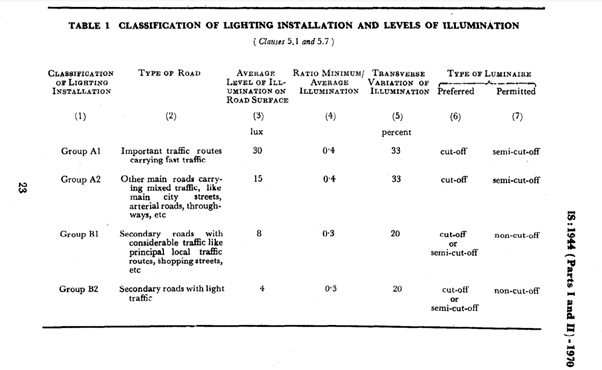


.jpg)

