BEML has initiated the process of Design, Development and Supply of 1500 HP engines to the Combat Vehicles Research and Development Establishment, DRDO. The engine will be used on the Future Main Battle Tank being developed by CVRDE and is designed to work in extreme environmental conditions.
In this regard, BEML has inaugurated the Engine Design & Development Centre at their Mysore Complex today. The Centre will support the development of a 1500 hp engine for futuristic tanks along with other engines.
CMD BEML inagurated Design and Development Centre at Mysuru Complex
About BEML Mysuru Complex
BEML Limited, the trusted name for over 52 years in the mining and construction industry, channels its expertise into the priority sector of energy with the manufacture of fuel-efficient diesel engines. Established in the year 1991 in Mysuru, with technical know-how from Komatsu Japan, BEML diesel engines are built for maximum reliability, high performance and lasting value. These engines are backed by the facility of application engineering, multi-location sales & service network and rehabilitation facility.
Engine Division manufactures heavy duty Diesel Engines for application on a wide variety of Earth Moving, Mining and Construction Machinery and Defence Equipment. Apart from these, the engines are also offered for other industrial applications as well as diesel generator sets. BEML Engines are used on Bull Dozers, Dump Trucks, Motor Graders, Wheel Loaders, Pipe Layers, Hydraulic Excavators, Loading Shovels, C Crane, Aircraft Towing Tractors, Backhoe Loaders, Water Sprinklers and Heavy Duty Trucks. These Engines are capable of operations over a wide terrain right from sea level conditions to high altitude (19,000ft) as well as under sub-zero conditions.
Government of Karnataka partners with Singapore firm, LNG Alliance, for the development of Karnataka’s first LNG import terminal.
New Mangalore Port Trust (NMPT), a major state port in Mangalore, Karnataka signed a Cooperation Agreement with Singapore based LNG Alliance Pte Ltd to develop a Liquefied Natural Gas (LNG) import terminal with an initial capacity of 4 MTPA, with provision for LNG virtual pipelines and an LNG bunkering facility.
LNG Alliance, together with Government of Karnataka and NMPT, has proposed to undertake the conceptualization of commercial project structure for developing a major LNG import terminal in Karnataka, with an initial capacity of 4 Million Tonnes Per Annum (MTPA), and the potential for expansion up to 8 MTPA in line with the estimated demand increase over the next 20 years. In addition, this import and regasification terminal would also have the ISO LNG containerisation and LNG truck loading facility for serving the industrial and transportation sector. This could also be India’s first dedicated LNG bunkering facility that would provide LNG as fuel for ships visiting the NMPT port and bunkering shuttles to the West Coast of India.
If LNG Alliance is the successful bidder when the port invites open tenders for setting up of the terminal, LNG Alliance intends to invest approximately 290 million US dollars to develop, construct, and operate a Floating Storage and Regasification Unit (FSRU) over the next 3 years, and manage the LNG supply. “We see this as an important step to meet India’s cleaner energy goals of phasing down coal fired power plants and transitioning to an emission free economy using LNG as a bridging fuel. LNG Alliance will develop a tolling fee based floating LNG import terminal, within the maritime concession area of the NMPT. This terminal will also be open for third party access and will provide the most competitive tolling rates in India, based on the LNG sourced from our supply partners.” said Dr. Muthu Chezhian, the Chief Executive Officer of LNG Alliance, Singapore.
NMPT, the gateway port for the State of Karnataka, is well connected with major interstate highways and railways, allowing for easy access for downstream distribution of LNG by virtual pipelines, which makes NMPT as the ideal location for the LNG import terminal in Karnataka. “The proposed project could not only boost New Mangalore Port’s vision of undertaking initiatives towards a green future, but bolster the country’s Natural Gas grid, thus contributing to the Honourable Prime Minister’s efforts in reducing the carbon footprint of the country. The project is subject to the fulfillment of procedures adopted at the port and approval of the competent authority”, said the Chairman, NMPT.
“As part of the Invest Karnataka Conclave, chaired by the Honourable Chief Minister of Karnataka, an MoU was signed between the LNG Alliance and the State of Karnataka in June 2021, which formed the foundation of the current Cooperation Agreement signed between LNG Alliance and NMPT in December 2021. The proposed LNG terminal at NMPT will accelerate industrial growth, create job opportunities across the city gas distribution (CGD) networks, and will provide reliable energy security to Karnataka”, said Karnataka’s Commissioner of Industries, Ms. Gunjan Krishna.
India’s energy consumption has been estimated to grow by at least 35% from now to 2030, even with a delayed growth scenario due to the pandemic. As India builds out its gas infrastructure, natural gas will find multiple uses in India’s energy system, including help in meeting air quality and near-term emissions goals. “The LNG Terminal at NMPT will bring many benefits to the households and industrial customers in Karnataka, most importantly affordable natural gas supply. Local industries will gain from the advantages of the new supply chains that are created through the establishment of satellite LNG/CNG fuel stations and LNG distribution thru virtual pipelines, to reach the hinterlands of Karnataka and the growing CGD networks.” said Ms. Cheryl Goh, the Executive Director of LNG Alliance, Singapore.
About NMPT
NMPT operates a world class port located in Mangalore, Karnataka, with the deepest inner harbour on the West coast of India. With a current level of handling 39 million tons of cargo, the NMPT port is equipped to handle all types of cargoes from big industries and companies. Mangalore Refinery and Petrochemicals Ltd (MRPL), Kudremukh Iron Ore Company Ltd (KIOCL), Hindustan Petroleum Corporation Limited (HPCL), Total Oil India Pvt Ltd and Udupi Power Corporation Limited (UPCL) are just some of the renowned companies utilizing NMPT.
About LNG Alliance
LNG Alliance is a Singapore company with experience in developing energy projects in the Gas and LNG sector and is a provider of end-to-end project development of LNG terminal solutions as a fully integrated turnkey solution provider from concept to project development, project execution, asset ownership, and operations for LNG infrastructure and LNG supply with ongoing projects in Mexico, Indonesia, USA and Caribbean
The petrochemical giant Petronas Malaysia to invest Rs. 31200 Crores on a Green Hydrogen plant in Mangaluru.
News in detail
Karnataka has signed a MoU with Petronas Malaysia, a renewable giant, to facilitate their investment of Rs. 31,200 Crores for establishing a unit to make green Hydrogen plant in the Mangaluru district. This futuristic project will change the face of the coastal city – of Mangaluru forever.
First let’s understand what’s the big deal about green Hydrogen
— Gunjan Krishna, IAS (@CommIndustries) July 6, 2022
Green Hydrogen and its impact on planet earth
Green Hydrogen (GH) is the buzz going around the globe, as it is touted to be a substitute for oil and natural gas from earth. Extracting oil, natural gas, coal, etc from earth creates irreversible damage to the planet. So, if we want to PASS ON a safe and livable planet to our children/ grandchildren, then we should stop the exploitation of earth in the name of extracting oil, gas, coal, etc by finding a right alternative.
So, Hydrogen perfectly fits the bill, but again though Hydrogen is found abundantly in nature, it is always found along with other elements. For example Water (H20) – two parts of Hydrogen molecules are attached to one part of Oxygen atom. To separate Hydrogen molecules from Oxygen, we need to use a process called “Electrolysis” that consumes lots of power. However, the power can be produced using renewables – “solar”, “wind” and “hydropower”, which makes the power green. When green power is used to make Hydrogen, it is called green Hydrogen (GH).
The usage of GH results in “ZERO” emission. In case if it becomes a true replacement for oil, natural gas, coal, lignite etc, then within a span of 150/ 200 years, Earth can turn back to how it used to be till 300 years ago – a cleaner, healthier place to live.
Net zero economy
Green hydrogen could be a critical enabler of the global transition to sustainable energy and net zero emissions economies.
There is unprecedented momentum around the world to fulfill hydrogen’s long standing potential as a clean energy solution.
Green Hydrogen as fuel – cost is the limiting factor though
GH can be used as fuel to run all kinds of automobiles, trains, airplanes, large container ships etc. But the cost of GH is high and unaffordable for mass usage. When the cost to produce 1 tonne of GH drops below 1 USD, it will find wide acceptance. The trade pundits predict that it will happen by 2030. However, researchers and scientists are racing against time to make it happen by 2026/ 2027 timeframe.
When the world reaches this stage, planet earth would have more fresh air to breath with less pollution in the atmosphere.
Hydrogen fuel cells
A hydrogen fuel cell (HFC) is an electrochemical device that uses a chemical process to convert hydrogen to electrical power, which in turn can drive one or more electric propulsion motors in an HFC powered automobiles. Electricity, water and heat are the only products of this chemical process, which makes hydrogen an extremely clean fuel.
HFCs can be used in a broad range of applications. These range from powering buildings, cars, trucks, to portable electronic devices and backup power systems. Because HFCs can be grid-independent, they’re also an attractive option for critical load functions such as data centers, telecommunications towers, hospitals, emergency response systems, and even military applications for national defense.
Green Ammonia
Currently Ammonia is produced using natural gas, so production of Ammonia is highly polluting and it adds 10% to the overall global emissions. Since Ammonia is the main ingredient of all kinds of commercially produced chemical fertilizers, fertilizers factories emit a whole lot of emissions. However, the world depends on chemical fertilizer for food production, so in a way Ammonia contributes maximum to the pollution. Nevertheless, Ammonia can also be produced using GH (H2) by combining it with the nitrogen (N2) available naturally in the atmosphere, through a process called Haber’s process. The chemical reaction will result in Green Ammonia (GA), which when used in making chemical fertilizers, is much less polluting.
Green Ammonia can be used as fuel
GA can be used as a fuel: not only does it burn like GH, but it has a higher energy density than hydrogen and is easier to store and transport unlike hydrogen. GA produced using GH makes an effective candidate for use in the shipping industry. It can provide sufficient energy for long-haul voyages.
Ammonia as storage medium
However, Hydrogen gas is highly volatile/ inflammable and is dangerous to store. It can ignite easily if there is even a small leak to the atmosphere. So, it needs a relatively less inflammable storage gas as a medium, to make it less-dangerous to store and transport it (Hydrogen) all over the globe.
Ammonia can act as a storage medium for hydrogen – enabling it to be stored and transported over longer distances more easily.
In Japan, it is already considered the most viable carrier for hydrogen in storage tanks. GA can be used as a fuel as well as a carrier medium for hydrogen in stored tanks.
How will India benefit out of Green Hydrogen/ Ammonia?
India is in a peculiar stage where the Indian economy is growing fast and the revenues earned is spent heavily on buying crude oil from the Middle east. India is the third largest importer of crude oil and on a daily basis, we spend USD 5 billion (Rs. 40,000 Crores). Now imagine the number Rs 40,000 Crores x 365 – one year. It is said that nearly 85% of our oil needs are met from imports. That means, we import more than we export. In a way to say, we spend more than what we earn. This has to somehow reverse and only the mass adaptation of GH/ GA/ HCF in our daily lives will ensure that.
Atma Nirbharta in fuel production
So GH, GA, HFC etc will make India achieve Atma Nirbharta in fuel production using GH. India is also aggressively working on plans to produce bioethanol fuel from agricultural, domestic, commercial waste, as well as molasses from the sugar Industry. Bioethanol can be used as fuel to run automobiles.
If India can achieve this target, by 2030 India’s crude oil import bill will be bare minimum, and the net savings can be used for empowering Indians to lead a high-quality life.
Conclusion
Countries across the globe are in a race to transform their economies to “Net zero economy” through the usage of sustainable, emissionless energy. Each one of them has targets, some aim to achieve it in 2050, some others in 2060 and India wants to achieve it in 2070.
To meet this goal, India has to come up with policies that facilitate the transformation. Several states like TN, Andhra, Karnataka, Maharashtra, Gujarat have already signed deals with private companies to produce GH, GA, HFC, Bioethanol, Electric vehicle batteries etc.
If these goals are meticulously planned and executed, in 50 odd years from now, India will become rich with Indians enjoying high-living standards.
To attract cross-border investments the Karnataka Industrial Area Development board (KIADB) has initiated acquiring 2000 acres of land in the border districts of Kolar and Chikkaballapur districts.
Further, in Kolar district an extent of 511.12 acres for development of Vemgal 2nd Phase and 743.04 acres for Bhuvanahalli Industrial area are under the final stage of acquisition. Also, an extent of 615.10 acres for development of Vemgal 3rd Phase Industrial area,about1489.25 acres for development of Mastenahalli 3rd Phase Industrial area & around 1000 acres at Chikkaballapur Industrial area and an extent of around 2000 acres adjoining to Chennai – Bengaluru express – way are being identified for land acquisition for development of industrial areas. The Committee suggested expediting the process of acquisition by KIADB.
Southern Cargo private limited (SCPL), a well established decades old Bangaluru based cargo carrier is one of the leading Transport Companies in South India. The company proudly claims to have big MNCs as its clients – Pepsico, Britannia, HUL, Saint Gobain, ITC, etc.
SCPL is now diversifying into coffee business to tap the growing opportunity. They have formed a subsidiary company called “Paraataparaa coffee Pvt Ltd” to front-end the coffee business. Through this subsidiary, the southern cargo guys are investing Rs. 237 Crores to build a green field instant coffee powder making and packaging unit.
Location and area of the land
The proposed plant is likely to come up on a 15 acre plot at Immavu industrial estate near Mysuru. The plant is likely to give direct jobs to 200 people and an equal number of indirect jobs are on anvil.
One more company added to the long list of MNCs which opened their branches in Mysuru recently
Travancore Analytics – a birds eye view
Travancore Analytics (TA), a Thiruvananthapuram, Kerala based IT company with offices in Cochin and USA has opened their new unit in Mysuru in the month of April. TA was founded in the year 2007 by professionals with the passion to provide cutting edge IT solutions to solve some of the complex business problems.
TA is into the development of Customized Software that can digitally transform their clients’ business and make it more amenable to the 21st century trends and challenges. By transformation, the clients can unlock more value from their business which can fetch good returns to them.
TA serves their customers across the globe from the USA, Australia, Japan, Middle East, Europe to South Asia. The domains in which they work are as follows: Education & Training, Media & Sports, Manufacturing, Healthcare, Retail & Food, and many more.
Happy customers
TA boasts of a long list of 34 MNC companies as their customers and they are spread all across the world. To bring in more customers, the team at TA has to grow big and fast. This makes perfect sense for them to open a unit in Mysuru.
Why Mysuru?
The royal city of Mysuru is rich in talent and the city provides enviable living conditions for working professionals. The infrastructure and lifestyle Mysuru offers is pretty good, on par with what any other fast growing city can offer. TA has done the right thing by choosing Mysuru for locating their newest office, and it is for sure that the city will meet and surpass their expectations.
The Himavad Gopalaswamy temple is a popular spiritual destination in the Mysuru region. However, outside this region people hardly know about it. This article intends to briefly introduce the temple to everyone seeking divine blessings of the lord Gopalswamy.
Himavad Gopalaswami betta – a brief introduction
“Do you want to be away from the hustle and bustle of your life? “Do you love to enjoy the scenic beauty of the dense forest while traveling up a hill?” “Do you love to feel, smell, touch and play with passing clouds?” “Do you love to do silent meditation on top of a hill?” “Do you want to pray and seek blessings from lord Krishna?”
If the answer to these questions is “YES”, then look no further, head straight towards Himavad Gopalaswamy betta – a temple dedicated to Lord Krishna built atop a hill in the western ghats.
The hill is a part of Bandipur wildlife sanctuary and is frequented by wild elephants. Himavad Gopalaswamy Betta is covered with mist for most parts of the year and the temperature averages as low as 20 degrees with cool breeze. The temple is at a height of 4770 feet from Sea level.
History
The Temple of Shri Himavad Gopalaswamy was built over 700 years ago, and is one of the famous temples with picturesque views. It is also called South Govardhanagiri and Kamalachala.
Moola Pratima
The legends say that the sage Agastya, performed intense penance, and as a result lord Vishnu blessed this place and promised to reside here. As this was a place of worship and penance, it used to be called as ‘Hamsatheertha’, which means the lake of swans in Sanskrit. Swan has a mythological significance in Sanatana Dharma. It symbolizes knowledge, tranquility and salvation. So, the belief is that whoever meditates in that place will be blessed with knowledge, bliss and Moksha – the permanent liberation from all kinds of miseries.
The Moola pratima of the temple, Lord Gopalaswamy or Krishna was consecrated by Rishi “Agastya” himself, millenia ago.
The moola pratime of Lord Krishna is 6 feet tall and is sculpted to perfection and the posture is that of a dance with the left big toe resting on the right one. The face looks mesmerizingly calm and happy. Simple yet grand is the prabhavali / panel behind the pratima. It has carvings of a tree, the Lord’s friends, his consorts Rukmini and Satyabhama, Cows and Cowherds all the reminiscence from Dwapara yuga.
The temple on the hill
However the temple for the deity was built during the Hoysala Era, and is facing North. This temple was built by the King Chola Ballala in the year AD 1315. Later, the Wodeyars of Mysore who were ardent devotees of Lord Venugopala, took up the task of maintaining the hill temple and now it is the Karnataka government which is doing that work.
The scenic beauty of mother nature
This site is known for its scenic beauty and holds great religious significance. The plain tracts on the hills are covered with lush grass, and is home to elephants, deer and rabbit, while the slopes are covered with thick forests, home to tigers and leopards.
If anyone desires to walk into the clouds or touch the cloud, then this is the place to be for realizing his desire, and he can be literally on cloud 9, in the true sense.
How to reach there?
The Himavad Gopalaswamy Betta is approximately 220 km from Bengaluru and 75 km from Mysuru on the Mysuru Ooty road.
There is a motorable road all the way to the top of the hill. However, private vehicles are not allowed on the hill. The visitors have to take the Govt bus organized by the Karnataka state transport from the Foothills. Materials used for pooja (prayers) alone such as flowers, fruits, Incense sticks etc. are permitted. NONE of the food items are permitted. Pooja materials should be carried in non-plastic bags. Visitors are allowed from around 8:30am till 4pm. Overnight stay on top is NOT ALLOWED.
Private vehicles are not allowed beyond the forest check post. One has to make use of the mini bus arranged by the forest department to visit the temple. First bus will operate at 8:30 am and the last bus is at 4:00 pm.
There is a forest department guest house at the top of the hill, which is not available for the public, only government officials on duty are allowed to use it.
Best Season to Visit the temple is monsoons and winter.
Festival and Jathra Details
Gopalaswamy Brahma Rathotsava is held every year in Phalguna Masam – Sravana, i.e. in the last week of month March. The special aspect of this car festival is that the chariot will be pulled by bamboo-creepers collected from the forest.
The Shravana masa of every year is the auspicious days of this temple. Every Saturday in Sravana masam special pooja will be held, thousands of devotees throng the temple at this time.
Civil works will be taken up at an approximate cost of INR 2870 Crore.
The Indian Navy plans to establish a Naval Air Base at Karwar (Karnataka), located about 120 km south of Panjim, Goa.The Project is to be executed at the Karwar Naval Base which spans over a large geographical area along the seacoast.
The total area of the site is approximately 1405 acres. The site is marginally undulated with high terrain on the southeast side of the site. The national highway, NH-17, runs along the east side of the site.
The following facilities are planned at the NAS
Runway, Taxiways, Aprons, Hangar buildings, ATC tower, Station admin building and other associated ancillary buildings including related common facilities (MEP) and site infrastructure utilities works (drainage, water supply, sewerage network & electrical works) including runway lighting.
Development of a greenfield Naval Air Station (NAS) is one of the key elements of Project Seabird Phase IIA. Development of NAS will involve construction of a fully operational and capable airfield with associated infrastructure and a wide range of facilities which support the air operations.
Thanks to MUDA, Southern parts of Mysuru city to have assured drinking water supply for the next 40 years
News in brief
Mysuru Urban Development Authority (MUDA) has embarked on INR 175 Crores upgradation of drinking water storage and distribution network.
The water storage enhancement
The project involves augmenting the water delivery mechanism to pumpin an additional 120 MLD of water from Bidirugodu on the banks of the Kabini. Though the installed capacity of the tank at Bidirugodu is 180 MLD, only 60 MLD is being pumped due to various reasons. Works will be taken up to shore up the distribution network of additional 60 MLD of water.
The MUDA to transfer INR 150 crore to Karnataka Urban Water Supply and Drainage Board (KUWSDB), which is the nodal implementation agency for the project. However, an additional INR 25 crore has also been committed to augment storage capacity by constructing four more master balancing reservoirs at Bidirugodu, in addition to the existing two, to meet the fluctuating demand on a 24×7 basis.
Water treatment and filtration
The project also entails expanding the capacity of the treatment and filtering plants, installation of high powered 1500 Hp capacity motors, upgrading the 11 kv power station at Udbur to 66/6 Kv apart from installing a few sub-power stations etc.
Areas covered
The augmented capacity once commissioned, it can take care of meeting the demand for water of nearly 50,000 households living in R.T.Nagar, Netaji Subhas Chandra Bose Nagar, J.P.Nagar, University Layout, all villages lying on both the sides of supply line, and private layouts abutting the Outer Ring Road (ORR). The total water requirement to the city has been pegged at 494 MLD by 2025, and this project will meet the demand.
Haleunduwadi – greenfield project
The project mentioned above is in addition to the greenfield mega drinking water project coming up at Haleunduwadi on the backwaters of the KRS which will supply an additional 300 MLD of water in 2 phases.
“Techmill ” – a Mysuru based decade old company, that has excelled in providing system integration services exclusively for the banking sector, has been acquired by Nagarro – a Germany based MNC offering digital product engineering services.
Nagarro – a brief introduction
Nagarro is a Germany-based company that offers a full-service portfolio of digital product engineering, digital commerce and customer experience, managed services, enterprise resource planning (ERP) consulting and other services. Nagarro is a public limited company as it is listed on the Frankfurt stock exchange.
Global presence
Nagarro has offices in 25 countries globally with major centres in Romania, Austria, Germany, India, Mexico, the UAE and the US. The company was founded in 1996, and was taken over by the German technology group Allgeier SE in 2011.
Nagarro has a strong presence in India with over 6,000 employees across its offices in Gurugram, Jaipur, Bengaluru, Pune, Hyderabad and now in Mysuru.
Digital product engineering: –
Nagarro’s core competency
Over the years various Organizations, Governmental departments, Financial institutions, Manufacturing agencies and others, have been offering their services to customers/ citizens/ staff digitally.
Gone are the days when one had to use his desktop or laptop computer to avail various services. Now, the entire gamut of services is made available to people through Apps on their mobile phones – Android, IOS. Be it new application/ extension of driver’s license, passport, insurance (vehicle OR life), stock/ derivative trading, banking activities like money transfers, investments etc. are all done using mobile Apps.
For example: – Almost all banks offer their services through their Apps (mobile or web version), similarly travel & tour booking, hotel room reservation, train and air ticket booking, E-commerce etc happens through their Apps (mobile & web version). These are the products engineered to deliver services personally at the individual level.
Product engineering can get very complex
Depending on the intricacies of the enterprise application, the Digital product engineering can get very complex.
For example, the Indian railway’s seat reservation/ booking system is considered to be one of the most complex systems in the world. That’s because the process involved to book a train ticket is very complex and elaborate. On the backend, there are mainframe servers put on service to take on the load. They work round-the-clock to cater to the millions of ticket booking/ reservation/ cancellation/ refunding requests happening simultaneously.
However, an IRCTC app installed on our phones interfaces seamlessly to the servers, books tickets on our behalf, and gives us the reservation details in a jiffy. To make the App work this smoothly, enormous amounts of brainwork has gone behind in architecting and engineering the solution.
It requires a lot of maturity, proper understanding of the domain and mastery of the technology to design and build such product apps. Nagarro has this kind of capability and because of that they have a long list of MNCs as customers.
Techmill
Techmill Technologies is one of the niche financial IT service providers delivering quality technology solutions to customers across the globe in the Fintech industry. Their main strengths are in software development, Digital banking transformation and Enterprise robotic process automation. TechMill has 6 offices 2 in India, one each in Singapore, Dubai, Ecuador, Australia.
With over a decade of handson experience in implementing complex solutions in the banking industry, TechMill will certainly bring in great value for the acquiring company – Nagarro.
The Swiss robotic cleaning machine maker Cleanfix R AG has opened their only manufacturing unit in Mysuru for India.
The Joint venture manufacturing unit
The world’s prominent maker of robotic professional floor cleaning machines – The Switzerland based Cleanfix Reinigungssysteme AG, has started their manufacturing unit at Thandya near Mysuru in tie up with Mysuru-based cleaning solutions maker Schevaran Laboratories Pvt Ltd.
The state-of-the-art unit at Thandya,spread over 50,000 sq ft with an investment of about 110 croreINR, is the first in India to manufacture 20 types of robotic cleaning machines – from simplest to the complex ones.. These machines offer automated cleaning services – like cleaning of warehouses, malls, and railway stations etc. They (machines) can offer tailor made cleaning services catering to smaller and more complex areas like corporate workspaces, industrial shop floors etc.
These robotic machines are driven by Artificial Intelligence (AI), so they know what to clean, where to clean and how to clean. Thanks to these machines, large spaces in India like malls, warehouses, Airports, exhibition halls, railway stations/ platforms, luxury hotels etc will see cleaner and more hygienic environments in the years to come. Whatever may be the shape or size of the floor, and whatever may be there on the floor, these machines have enough intelligence to carefully clean the space.
The joint venture inauguration
The Cleanfix India Manufacturing Facility located in Thandya in Nanjangud Taluk, Mysuru was inaugurated by Dr Ralf Heckner, Ambassador of Switzerland to India. Yaduveer Krishnadatta Chamaraja Wadiyar, Maharaja of Mysore also graced the occasion as a Guest of Honour.
The future of joint venture
This Indo-Swiss JV in manufacturing will pave the way for Cleanfix-Schevaran to emerge as a strong player in the cleaning equipment industry. We look forward to a growth that is not just sustainable but also responsible. There will be tremendous focus on automation and robotic cleaning which is really the need of the hour,” said Alex Cherian Kumbukattu, Managing Director, Cleanfix- Schevaran India.
Headquartered in Switzerland, Cleanfix Reinigungssysteme AG is a global leader in manufacturing world-class robotic hygiene and cleaning products and solutions. The company’s top priority is to offer the very best Swiss quality – backed up by advice, service and proximity to customers. Through its constant innovation, Cleanfix has been able to expand its position in the market and is now excellently positioned by its worldwide subsidiaries and agencies. Cleanfix machines now keep buildings spotless in over 85 countries.
About Schevaran Laboratories Pvt. Ltd.
Schevaran was founded in Mysore in the year 1988, with the vision and commitment to produce world class 360 degree cleaning solutions, tailor made for the Indian geography. A forerunner in the domestic cleaning products market, Schevaran has formulated and produced over 150 cleaning and maintenance chemicals that are widely used by businesses around the country.
The company continues to augment the product range through it’s R&D programme, and via strategic partnerships with leading international manufacturers of cleaning machines and accessories. Schevaran is an exclusive distributor and strategic partner for Cleanfix cleaning machines, and Filmop cleaning accessories and equipment.
Schevaran Innovation Centre (SIC), the Research and Development wing, carefully formulates and iteratively perfects new products for the rapidly evolving cleaning industry. The ongoing focus at Schevaran Innovation Centre is to create high-quality, environment friendly products through sustainable production processes. With over 150 corporate customers, Schevaran products and equipment are used to clean over 200 million square feet each day. Schevaran launched its Innovation Centre in 2014 within its Mysuru premises, to support the core vision of becoming a truly eco-friendly company.
With a growing demand for rail connectivity to different parts of the country from Shivamogga city and a keen interest and follow-ups by Former CM B S Yedyurappa and MP, B Y Raghavendra to improve Air and Rail connectivity to Shivamogga city, the railways have decided to upgrade Koteganguru halt station (KGH) as a full-fledged coaching depot cum railway station at a cost of around 105cr
The proposed Coaching Depot is located at Koteganguru Halt Station falling between Shivamogga & Talaguppa stations of the Mysuru Division.
Coaching depot cum railway station is designed with a maximum permissible speed of 130 km/h on the mainline and a minimum of 30 km/h for loop lines. Proposed facility will help to introduce new trains and increase in frequency of trains from the city.
Following facilities are planned
The following major facilities are planned in the proposed New Coaching Depot.
All India Institute of speech and hearing (AIISH), Mysuru is being transformed into a stand-alone Center of Excellence (CoE) for treating the entire spectrum (A ~ Z) of speech and hearing ailments. The Rs. 159 Crores newly built complex, which houses ultra modern/ futuristic equipment will be dedicated to the nation by none other than PM Modiji on 20-June-2022.
Our Honorable PM Shri @narendramodi ji will be inaugurating the Center of Excellence built at the Speech and Hearing campus Mysuru, constructed under the Central Govt's grants of Rs 155.49 crores. pic.twitter.com/PE5XhUlLoV
One of the most common ailments that has gripped the society is “Speech & hearing” related one, and unfortunately the centers which treat such ailments are not that common in India. It was the vision of the Mysuru royals to have a center dedicated to treat “speech and hearing” ailments of common people that brought such a center to Mysuru in 1966. The rest they say is history.
The institute grew leaps and bounds since inception and has been offering excellent services in the treatment of speech and hearing ailments to all sorts of people. By the mid 1990s the reputation of this institute started spreading outside of India. Patients from all over the Indian subcontinent, Middle east, and Africa started arriving to Mysuru to avail the treatment.
AIISH Mysuru CoE
The new Infrastructure
AIISH, Mysuru will have following facilities which will make it sub shoulders with the best in the world.
The Centre for Speech and Language Disorders in children, adults and senior citizens is expected to handle 5,900 people (treatment and rehabilitation) and 4,800 (assessment) a year. The centre’s activities include assessment, treatment and rehabilitation services including voice disorders, craniofacial anomalies and cleft palate, neurogenic speech disorders, autism spectrum disorders, learning disabilities, mental retardation and syndromes and specific language deficit, childhood aphasia and allied disorders.
Other centres coming at CoE are Centre for Persons with Tinnitus and Vestibular Disorders, Centre for Hearing Impairment in Children, Adults and Senior citizens, Centre for Persons with Swallowing Disorders, Centre for Surgical Rehabilitation of Communication Disorders, Centre for Speech and Language Sciences, Centre for Hearing Sciences, Centre for Prevention of Communication Disorders and Epidemiological Research and Cognitive Behavioral Science in Communication Disorder, Centre for Rehabilitation Engineering, Acoustics and Biomedical Engineering, and Centre for AAC and Sign Language. Outreach centres include Centre for Public Education in Communication Disorders.
The center will design & develop gadgets
The centre has infrastructure to design and develop assistive technology devices, augmentative and alternative communication devices, which are tailor made for persons with communication disorders. It also aims to design and develop instruments and gadgets for diagnostic and therapeutic purposes and linking informatics and speech technology for speech-based work on the human computer interface, according to a note from the institute.
Conclusion
The upgraded AIISH is not only the feather in the crown for Mysuru, but it is a boon for all who are suffering from speech and hearing related problems. Now they can get advanced high-tech care in India, right in Mysuru that too at reasonable/ most affordable costs.
A slew of infrastructure upgrades are proposed by the South Western Railways in Mysuru to improve the region’s connectivity and cater to the future traffic. In this regard, SWR is focussing on remodeling of Railway yards at Mysuru, Ashokapuram, Naganahalli and Belagula stations along with creation of allied facilities meant for maintenance and comfortable circulation of passengers.
Ashokapuram Railway Station | Pic by: Shreyas K Mahesh
The proposed works will augment the berthing capacity at Mysuru-end which will directly help in improving the operational efficiency and enable introduction of additional long distance trains and MEMU services. Thus, giving a major fillip to commerce and providing the best in class passenger comfort.
To read about the facilities planned at Mysuru railway station and Naganahalli Click Here, and for Belagula click here
Ashokapuram Railway Station | Pic by: Shreyas K Mahesh
Following facilities will be developed at Ashokapuram railway station-
Connecting Road No.4 and 5 to Main line at Chamarajanagar/ CMNR End
Construction of New Platform between Road 5 & 6 for a length of 540 Meters
Provision of IRS Platform shelter of 16.0m x 9.45 m wide, 8 bays between Road 5 & 6
Provision of water Hydrant on Road 4 & 5 and 6 & 7
Extension of Platform 1, 2 & 3 to accommodate 24+1 ICF Coaches. Extension of Platform No. 1 for a length of 87.5meters and Platform No. 2 & 3 for a length of 57.5meters.
Extension of FOB
Provision of drinking cistern with 4 water taps at PF No.2 (2 Nos)
The emerging mini metro city will soon be upgrading its railway infrastructure in the form of remodeling of Mysuru railway junction (MYS) and Naganahalli railway yard.
The total cost of the proposed infrastructure works is 487.8 crore INR. Of which, 396.73 crore INR is estimated for the Mysuru yard remodeling while it is about 92.07 crore INR for the Naganahalli railway yard.
The expansion at the city railway station is planned to be taken up by relocating the railway staff quarters located adjacent to the yard.
The expansion will solve decades old problem
The proposed plan of the railways assumes great significance considering that the current railway yard at Mysuru is saturated, resulting in constrained operations.To accrue full benefits of track doubling between Mysuru & Bengaluru the end terminals need to have adequate berthing infrastructure.
Not having enough berthing space is one of the main reasons why trains bound to Mysuru and Bangaluru junctions end up waiting for the berth long outside.
The RFP and DPR for infrastructure upgradation
In this regard, recently, the Ministry of Railways had floated a Request For Proposal (RFP) for providing architectural and technical consultancy for a feasibility study, master planning, urban designing, engineering and preparation of Detailed Project Report (DPR) for integrated redevelopment of Mysuru Railway Station.
Proposed addition to the infrastructure
MP Pratap Simha in a tweet confirmed the following works that are proposed to be taken up-
Our beloved PM @narendramodi ji is giving nearly 500 crores for the remodelling of Mysuru and Naganahally railway yards n he is going to do the Bhoomi Pooje from Maharaja grounds. I also thank Hon. RM @AshwiniVaishnaw ji for his support and blessings. pic.twitter.com/BO2GutIsQL
Mysuru railway station to get a new Multimodal Third Entry.
3 additional Platforms
4 additional Pit lines
4 additional stabling lines
1 additional shunting neck
The facilities will ensure speeding up of trains and also introduction of new trains from Mysuru, thereby boosting connectivity, which will directly help the tourism and industrial sectors. The third entry aims to reduce congestion at the other two entry/exits.
Naganahalli railway yard
1 additional Platform
2 Stabling lines (1 stabling line & 1 dry pit line with MEMU shed)
The above facilities are meant to facilitate starting of MEMU services from Naganahalli.
The story of Mysuru Ashtanga Vinyasa Yoga and how it spread across the world
Synopsis
Of late, Mysuru has become synonymous with Yoga. Thanks to the famous Ashtanga Vinyasa Yoga (AVY), the city has become very popular among yogis. The AVY influenced Yogis across the world in such a way that the city became “a go-to destination” for learning and practising YogaAsana. This has led to increased popularity, which fueled the rise of Mysuru as the Yoga capital of India. No wonder, Mysuru was chosen as the venue to celebrate “International Yoga day”.
This article briefly explores how the yesteryear sleepy small town, Mysuru, reached the stage where it is today and how AVY spread across the world. But before we jump straight into the story, let’s throw some light on Yoga itself first.
Introduction
Brief on Yoga
The true meaning of the word Yoga is union. Union of what? – Union of mind (manas) and soul (atman). This union is for elevating the human consciousness and merging with divine consciousness. That means, the ultimate goal of Yoga is “God-realization”, not anything else, and the mind plays a crucial part in facilitating that. So, yoga practice is essentially a spiritual practice, not merely an exercise to put the body in shape and attract good health.
Why mind? – It is our mind that absolutely controls our breath and our body movements. However, the mind is driven by our thoughts which keep bombarding it all the time. The thoughts in our mind produce emotions, and all our behaviours and actions are driven by them (emotions). So, our emotions are the root cause of over 95% of all our diseases. Positive OR joyful emotions lead to good health, while negative OR disgusting emotions like disappointments, jealousy, sadness, anger, revenge-taking, lustfull mindset etc lead to bad health. So, to lead a healthy life, we should always keep a tab on our state-of-mind OR our emotions.
Mind control is necessary for Yoga
Stilling the mind is a very important step in Yoga. But the mind is always full of thoughts, so stilling seems next to impossible. That is where the YogaAsana, Pranayama and Meditation, done in accordance with the “Yama Niyama” principles, can come in handy. Yoga sadhana requires vigorous practise for years to perfect it. The mind, breath and body-movements when brought in absolute sync with each other, the mind will get empty and still. With an empty mind, one can begin his inner spiritual journey.
Food has a role to play in Yoga
Even food has a major role to play in keeping our minds joyful and light. A joyful & healthy mind will result in a healthy body. Ayurveda recommends varieties of food items that are nutritious and satvik in nature and can balance tridoshas (Vaata, Pitta, Kapha). Yogis who want to still their minds should be mindful of what they eat.
Daily we too experience the joy of the stilled mind
In our day-to-day life, we experience the “still mind” only when we get into a deep sleep at night, and a good night’s sleep will keep us in a joyful state the whole of the next day. A Yogi experiences this kind of joy day-in-day-out because he always keeps his mind shut even during the day for unnecessary thoughts, and opens it only for the thoughts he intends to get.
In a nutshell, Yoga is a “spiritual practice” and people should resist commoditizing it. We should stop making it look like mere exercise done for physical fitness, and to earn some quick money.
Mysuru’s tryst with Yoga
Thirumalai Krishnamacharya (TK)
Tirumalai Krishnamacharya
Yogasana is not new to Mysuru. The late Maharaja of Mysuru kingdom -His Excellency Krishna Raja Wadiyar IV (1884 ~ 1940), gave patronage to many yoga teachers, and scholars and supported yoga seekers too. One among them was Tirumalai Krishnamacharya (TK)(1888 ~ 1989). He was a yoga teacher par excellence, ayurvedic healer and a scholar. He is called the “great grandfather of modern yoga” for his wide influence on the development of postural yoga. He was solely responsible for the revival of, long forgotten, “HATHA YOGA ” in recent times.
TK – the architect of Vinyasa
The then young TK was so scholarly that he travelled all over India giving lectures and demonstrations to promote yoga. His trip, boarding, and lodging were funded by the King of Mysore, Krishna Raja Wadiyar IV.
TK had such a mastery of yoga asanas that while he was in one of the yogic postures he could stop his heartbeat for hours. Also, he could twist and turn his body like an elastic band and remain in such positions for long. People were awestruck looking at his feats and became instant followers. Such was his command of Yoga postures.
He is widely considered the architect of VINYASA in the sense of combining breathing with movement; the style of yoga he created has come to be called VINYASA KARMA YOGA.
Maharaja & his family became TK’s students
The Maharaja was impressed by the young TK’s passion and enthusiasm to promote Yoga and the authority he had on its yogic science. He (Maharaja) then engaged TK to teach YogaAsanas to him and his family. Initially, TK taught yoga at the Mysore Palace. He soon became a trusted advisor of the Maharajah and was given the recognition of Asthana Vidwan — the intelligentsia of the palace.
In his long life of 101 years, TK changed the face of Yoga and made it accessible to everyone, including the common man on the street.
TK and his famous disciples
TK had huge fans following those days. His students included many of yoga’s most renowned and influential teachers: Indra Devi (1899–2002); K. Pattabhi Jois (1915–2009); B. K. S. Iyengar (1918-2014); TK’s son T. K. V. Desikachar (1938-2016); Srivatsa Ramaswami (born 1939); and A. G. Mohan (born 1945). All these stalwarts learnt YogaAsanas in Mysuru under the strict tutelage of TK. That was how the Yogic foundation was laid in Mysuru.
Indra Devi
Among them, Indra Devi took Yoga to the west. She single-handedly popularized Yoga in the USA through her teachings, as many Hollywood celebrities became her students in the 1950s. She positioned Yoga as a means to relieve stress and gain health, which Americans wholeheartedly embraced. She authored a few books on Yoga which earned her the nickname “first lady of yoga”. In her long life of 103 years, she did great service to mankind by introducing Yoga to people in North & South America and China. She breathed her last in the year 2002 in Argentina and departed this mortal world peacefully, maybe with a sense of accomplishment.
B. K. S. Iyengar (BKSI)
BKSI was an Indian yoga teacher and his style of Yoga is called “Iyengar Yoga”, and he authored 11 books on Yoga and philosophy – Light on Yoga, Light on Pranayama, Light on the Yoga-Sutras of Patanjali, and Light on Life, which earned him instant worldwide recognition.
Early years: After rigorous training in Yoga under the supervision of TK in Mysuru, BKSI left for Pune in 1937 as per his master’s instructions to start a Yoga school there. He did a phenomenal job teaching Yoga to scores of people by basing it out of Pune.
He (BKSI) has been credited with popularizing “Iyengar yoga”, first in India and then around the world.
Recognition and Awards: Time magazine in 2004 considered BKSI as one of the 100 foremost influential people in the world, and that explains the gravity of his popularity around the world. In a life span of 95 years, BKSI taught Yoga to thousands of people across the globe and the Government of India recognized his service and awarded Padma Shri in 1991, the Padma Bhushan in 2002, and the Padma Vibhushan in 2014.
Krishna Pattabhi Jois (KPJ)
KPJ (1915 – 2009) was an Indian yoga guru who developed and popularized Ashtanga Vinyasa Yoga (AVY). In 1948, KPJ established the Ashtanga Yoga Research Institute in Mysuru, to do deep research on AVY and to know how it can have a positive effect on health.
When TK was teaching YogaAsanas at Jagan Mohan palace in Mysuru to the royal family and others, KPJ was helping him. At times, he used to conduct classes on his own in the absence of TK. Such was the self-confidence and mastery he had on the subject. Maharaja was so impressed by KPJ that he (Maharaja) offered KPJ a teaching position at the Sanskrit College in Mysuru with an attractive salary. KPJ held a yoga teaching position at the Sanskrit College from 1937 to 1973. He became vidwan (professor) in 1956, and also held the position of Honorary Professor of Yoga at the Government College of Indian Medicine from 1976 to 1978.
The arrival of westerners to learn AVY from KPJ
In 1964, a Belgian named André Van Lysebeth spent two months with KPJ in Mysuru learning the primary and intermediate series of the AVY system. Soon after that, van Lysebeth wrote the book J’apprends le Yoga (1967, English title: Yoga Self-Taught) which mentioned KPJ and included his address. To learn YogaAsana directly from KPJ, westerners came to Mysuru in big numbers.
The first Americans came after KPJ’s son Manju demonstrated yoga at Swami Gitananda’s ashram in Pondicherry. They were so impressed by the demo that they came in droves to Mysuru to learn AVY from KPJ. He (KPJ) became an instant celebrity in the western world.
To accommodate the increasing number of students, KPJ opened a new school in Gokulam in 2002. KPJ continued to teach at the Ashtanga Yoga Research Institute in Mysuru, now in the neighbourhood of Gokulam, with his only daughter Saraswathi Rangaswamy and his grandson Sharath for the rest of his life. He published the book Yoga Mālā, in Kannada in 1958, and an English translation appeared in 1999.
KPJ took AVY and Mysuru to the world
From 1974 onwards, KPJ started touring the world teaching AVY to everyone interested. He used to spend 6 months teaching AVY on the move and for the rest of the 6 months, he would stick to teaching his AVY at his residence in Mysuru. His teachings spread like wildfire across the world. Together with AVY, even the popularity of Mysuru also soared through the roof. His yoga is also called “Mysore style yoga” and quite a few yoga schools, the world over claim to teach this yoga to their pupils.
In his long life of 93 years, KJP transformed the lives of lakhs of people across the world and made it healthy & blissful through AVY. He, in fact, made Yoga fashionable and made it a “must ” for all kinds of people – from the common man on the street to celebrities of Hollywood, to executives in the corporate board rooms.
R Sharath Jois (SJ)
RSJ, the grandson of KPJ, has been in the line of teaching AVY for a few decades. SJ is the Director of KPJAYI, the Mysuru-based Ashtanga Yoga Institute. SJ taught alongside his grandfather, the legendary KPJ, for many years and he is now the world’s most advanced Ashtanga Yoga practitioner.
KPJAYI has 100s of certified AVY centres around the globe that conduct daily Yoga classes for thousands of people. In a way, RSJ is indirectly helping the world live longer and live healthily.
Conclusion
Maharaja of Mysuru -His Excellency Krishna Raja Wadiyar IV and mystic Thirumalai Krishnamacharya can be called the founding fathers of Modern Yoga OR Mysuru style yoga. No wonder flights landing in Bangaluru airport have so many foreigners wanting to head to Mysuru to learn AVY.
So, along with Ashtanga Vinyasa Yoga, the city of Mysuru has a special place in the hearts of Yogis, who lived in the city for months practising and perfecting their Yoga postures, and went home with lots of sweet memories.
The city of Mysuru was chosen as the venue for the “International yoga day” 2022 after considering the above facts. And it is a tribute to all those who made Mysuru what it is today.
The fast growing cities like Mysuru should have well developed infrastructure to cope up with the future growth in population and vehicular density. If not, living in Mysuru will be a nightmare in a few years from now.
Keeping this in mind, Mysuru MP Pratap Simha and Chairman, Mysuru Urban Development Authority (MUDA) met Shri Nitin Gadkari, Union Minister for Road Transport and Highways in Mysuru on Monday and urged him to provide Central government funding for the planned Peripheral Ring Road (PRR) – a much-needed infrastructure to make the travel around the periphery of Mysuru hassle-free.
The duo met Shri. Nithin Gadkari when he came to Mysuru on a personal visit and they appraised him of various centrally funded infrastructure works being implemented in Mysuru. The proposed PRR will be 5 to 6 kms away from the existing outer ring road (ORR) and will be around 70 plus kilometres in length. The land to the tune of 800 plus acres is required to build this PRR, and land acquisition takes the lion share of the project cost.
Significance of PRR and how it differs from ORR
Outer Ring Road (ORR)
The 6 lane outer ring road (ORR) connects all major suburbs around Mysuru. People from one suburb locality can move to another suburban locality without coming to the core city centre. This will make the city centre less congested, as there is no need for people to come to the city centre to make an onward journey. Also, people driving from another city wanting to visit any suburban locality, they can straight away go there without entering the city centre.
Currently most of the industrial estates are connected to ORR, so the raw material and finished goods can move in and move out of these estates using ORR.
Peripheral Ring Road (PRR)
PRR will be 5 to 6 kilometres from the existing ORR, so people from other cities wanting to visit neighbouring districts/ taluks like Madikeri, Nanjangud OR Chamarajanagar, need not take ORR, as it is within the vicinity of the Mysuru city. Instead they can take PRR and avoid getting into Mysuru city altogether. This will eliminate traffic congestion totally and make their travel that much pleasant.
In a nutshell
ORR has changed the way people travel within Mysuru and PRR will make a huge difference to those who intend to travel along the periphery of Mysuru. Their journey on PRR will be joyful, as they will get to travel on world-class road with least traffic congestion.
In the first part (Read Part-1) we have read about what makes Mysuru sandalwood oil special. In the second part, we shall understand the ways in which the government can kick-start the booming sandalwood economy.
There is an insatiable demand for Sandalwood oil in the world market, whose rates have crossed USD 3000 per liter. India has enormous potential to meet world demand, but unfortunately, living with self-imposed restrictions limits our oil production to a bare minimum. This article discusses how to break all barriers to sandalwood oil production and unleash a roaring sandalwood economy where everyone involved in the trade makes money.
What makes sandalwood so much in demand?
Sandalwood oil packs enough punches like no other when it comes to benefits.
Its potent antiseptic, extremely skin-friendly properties which make all high-end/ expensive products use it. Following category of products use sandalwood oil.
Men’s and women’s grooming products,
Cosmetics,
Toiletries
Aromatherapy oils to reduce stress, hypertension and heals wounds and treats skin blemishes
It has anti-tanning/moisturizing quality
High-end skin whitening, skin toning/ softening/moisturizing/ anti-aging creams have it
When consumed internally it works wonders
It can act as an antiviral, fever lessening, Blood pressure correcting, mildly sedative agent. So, sandalwood oil is used in Ayurvedic and other herbal healing products.
It is used as a natural flavoring agent in the food industry. Hence sandalwood oil makes food smell good and tasty.
Its fragrance is heavenly
Sandalwood oil has a very long-lasting fragrance, which experts claim to last over 24 hours when used on the skin. This is much longer than other essential oils like Jasmine oil, rose oil, lemon oil, lavender oil, etc.
The divine fragrance oozing out of the artwork made in sandalwood can last for decades. The art piece not only mesmerizes our eyes but brings in tranquility with its unique woody fragrance.
Sandalwood bark contains tannins
Special tannins found in sandalwood find its usage in the making of natural dyes.
Sandalwood is indigenous to Southeast Asia and the Southern region of India. The government controls sandalwood tree cultivation in India, and because of that, tree cultivation and harvesting activities are highly restricted. These restrictive government policies impair sandalwood production. Though sandalwood can grow across India, the top OR premium quality ones grow in the Western Ghats and a few other mountain ranges such as the Kalrayan and Shevaroy Hills.
Sandalwood Market
Though many varieties of sandalwood trees are grown across the globe, the Indian and Australian sandalwood varieties are famous for their texture, fragrance, and yield. So, they have excellent commercial value in the market. Apparently, India and Australia are the two largest growers of sandalwood.
The biggest markets for sandalwood are the United States, China, Japan, Europe & the Indian domestic market.
Competition to Indian sandalwood is heating up
Looking at the huge demand and supply gap and the limitation India has to produce sandalwood in bulk, a few ASEAN countries like Malaysia, Vietnam, Thailand, and South American countries like Colombia, Brazil, etc, which have similar climatic conditions to South India, have jumped on the fray. They are steadily increasing their sandalwood production and are trying to dominate the global supply in the near future. This intense competition is a threat to India’s sandalwood business and she can’t take it lying down.
What needs to be done to handle the threat?
The government should take this matter seriously and do whatever to double, triple OR quadruple sandalwood supply in the fastest possible time frame. Government should quickly do following
Openup sandalwood business to public
(a) The government should open up the sandalwood business and free it from all governmental controls in the truest sense.
(b) The freer the sandalwood business is, the more people will come into business.
(c) Declare it as a core industry that makes it eligible for term loans at the lowest interest rates.
(d) Incentivize sandalwood growing, harvesting, sandalwood oil distillation, and extraction activities. This will attract investors.
(e) Give enticing tax breaks to people in the sandalwood business – growing, harvesting, oil extraction, exporting, making and selling sandalwood artwork.
The government should start Taluk level co-operative societies to distribute sandalwood saplings and record the growers’ data on an online database. These societies should help growers to grow their produce without any hassles.
Start sandalwood board – sandalwood city Mysuru is the ideal location
To promote the production, distribution, and sales of sandalwood and its downstream products nationally and internationally, the government should start a SANDALWOOD BOARD” along the lines of the coffee board, tea board, spice board, commodity board, etc.
Based on the demand and supply situation, the board should fix the rates for sandalwood and sandalwood oil.
Allow corporates to enter into sandalwood business
To increase production of both sandalwood and sandalwood oil, the government should rope in MNCs and encourage corporate farming. They can lease land from individual landholders and grow sandalwood trees. As an intercrop, they can grow varieties of veggies and fruits which can be processed and sold abroad.
Allow electronic trading
The Sandalwood board should facilitate bulk buying/ selling of sandalwood/ oil through an ELECTRONIC PLATFORM exclusively built for that. The government should allow local/ international institutional buyers to participate in the auction.
The payment settlement system should take care of settling all kinds of payments within the promised time frame. The goods dispatch and delivery should happen in a professional way to deliver it within the promised time frame.
Conclusion
India has committed to move her citizens out of poverty in the shortest possible time.
When the economy crosses 12 Trillion USD, that’s when poverty can end. In order to do that fast, the government should explore various ways, and one of them is to embrace agroforestry – growing/ harvesting sandalwood in a big way. When done right, the agroforestry can fetch handsome returns to the growers, investors, tradesmen. The government should quickly come up with policies supporting that.
The much anticipated Center of Excellence (CoE) for cyber security was officially inaugurated online from Vikasa Soudha in Bengaluru on 09-June-2022. The CoE is to be located at Phygital labs, a 4000 square-foot office space in Mysuru. The inauguration of CoE in Mysuru, is one step in the right direction towards taking businesses beyond Bangaluru to Tier2 cities like Mysuru.
Happy to launch the newly setup Cyberverse Foundation’s logo & the website. HH Sri Yaduveer Krishnadatta Chamaraja Wadiyar, Chairman, Bherunda Foundation & Cyberverse Foundation Advisory Board & Smt. Trishikha Kumari Wadiyar, Chairperson, Cyberverse Foundation, were present. pic.twitter.com/q2r0cIKoXe
— Dr. C.N. Ashwath Narayan (@drashwathcn) June 9, 2022
News in detail
Mysuru’s tryst with Cybersecurity started around 2017/ 2018 when founders of MYRA business school and His Highness Yaduveer Krishnadatta Chamaraja Wadiyar, Chairman of Bherunda Foundation and few others set the ball rolling for establishing India’s first Cyber security hub based out of Mysuru.
They roped in the state government to make their dream come true. The Karnataka government, through “Karnataka digital economy mission” and “Beyond Bangaluru” program, started seriously working on the mission to establish the Cyber security CoE in Mysuru.
The “movers and the shakers” of this initiative, along with government officials, roped in “Information sharing and Analysis center (ISAC), Noida. The ISAC is India’s leading non-profit foundation for advancing national cybersecurity and professional ethics at work places. ISAC has tied up with NCIIPC, CERT-IN, AICTE, ministry of education, Government of India.
“Cyber-verse” – a Section 8 non-profit organization was started in Mysuru by the founders of Bherunda Foundation, ISAC and the MYRA business school.
Karnataka Digital Economy Mission is supporting the transformation of Mysuru into a cyber security hub. Cyber-verse will provide capacity building, training, simulation and R&D in the domain of cyber security to create a talent pool of cyber security experts to make Karnataka – the epicenter for cyber security talent with the skills to do innovation and R&D.
The training & capacity building exercise at Cyber-verse
Cyber-verse, at any given time, can train 50 students hands-on by exposing them to more than 200 cybersecurity scenarios and applicability-related topics practice. The students will get training on SOC simulator, Virtual Labs: a cyber security scenario simulator equipped with more than 500 scenarios, Hyacinth platform for simulation of attack and defense in cyberspace, malware repository, which includes more than 1.5 million malware available for the startup ecosystem to test the robustness of its products and services, policy and research wing: to focus on the development of various policies based on cybersecurity.
The establishment of CoE on cyber security marks the beginning of Mysuru’s long march towards excellence in cyber security matters and to make India that much safer for all of us.
The Mysuru/ Hunsuru unit of Maris spinners is augmenting its capacity by adding 7,488 spindles to its existing 28,704 spindles at an investment of INR 37.10 Crores. The expansion is going to see the light by July/ August 2022.
News in Detail
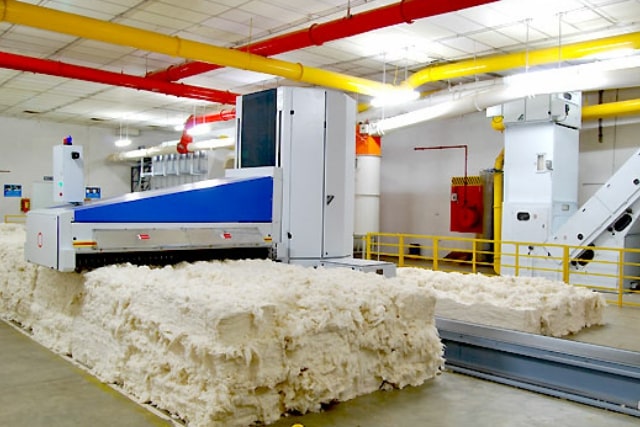
Chennai based Maris Spinners Limited, started its manufacturing unit in Kattemalalavadi village, Hunsur taluk, Mysore District in 1981. The Company presently manufactures 100% cotton carded yarn of counts 30s, and 40s for weaving, knitting and handlooms.
The company has a sound track record of productivity, and has been producing high quality yarn for the domestic market. There are over 200 customers domestically and have started to export their produce to overseas customers too.
Maris Spinners Ltd
History in brief
The Mysuru unit started its commercial production on 9th March 1981, with an installed spindleage of 11856. This was increased to 24672 spindles in 1991. Based on the demand, the company expanded its spindleage capacity periodically. The present capacity at Hunsur is 28704 spindles and is adding additional 7,488 spindles at an investment of INR 37.10 Crores to its capacity. So, by July/ August 2022, the expansion work should be over.
Company went public in 1995
On 13-Dec-1995, the company shares were listed on Bombay Stock Exchange (BSE). Since inception, the stock is performing well and has given decent returns.
Maris Spinners belong to a group with diverse interests
The group has interests in Tea Estates, Hotels, and Green power generation etc., as well. The company is well managed by directors at the board level. The units are managed by qualified and experienced managerial teams under the guidance of the Board of Directors